


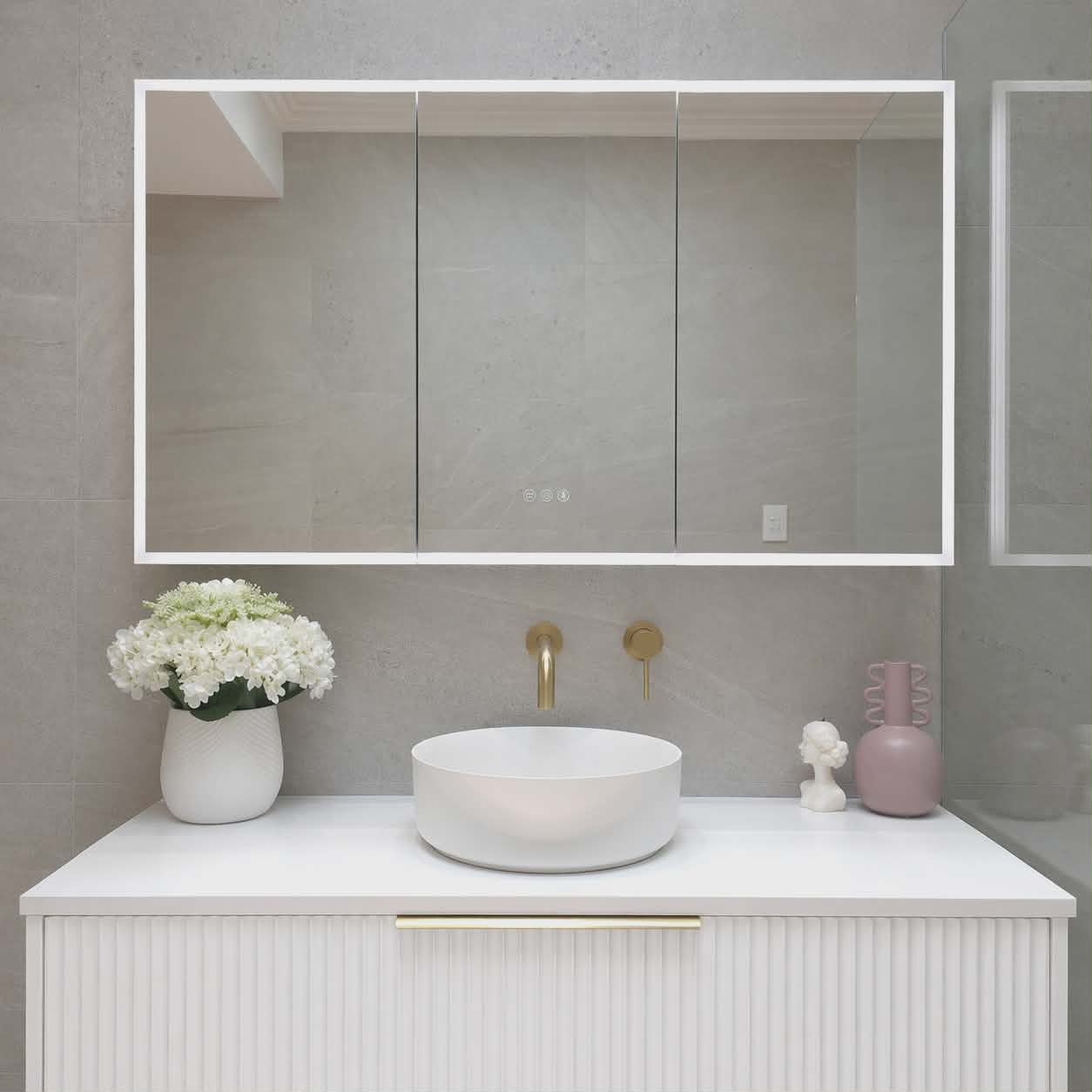

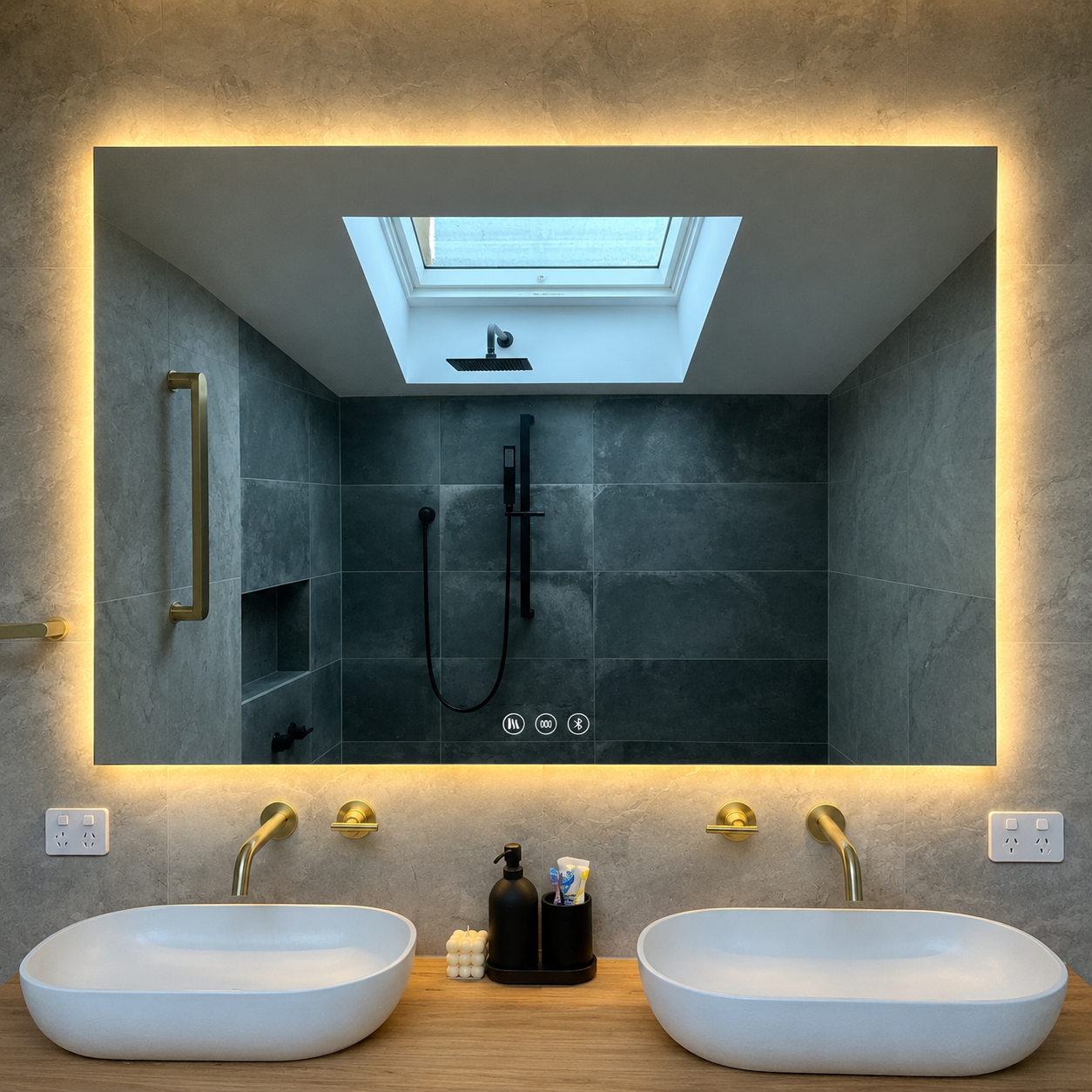
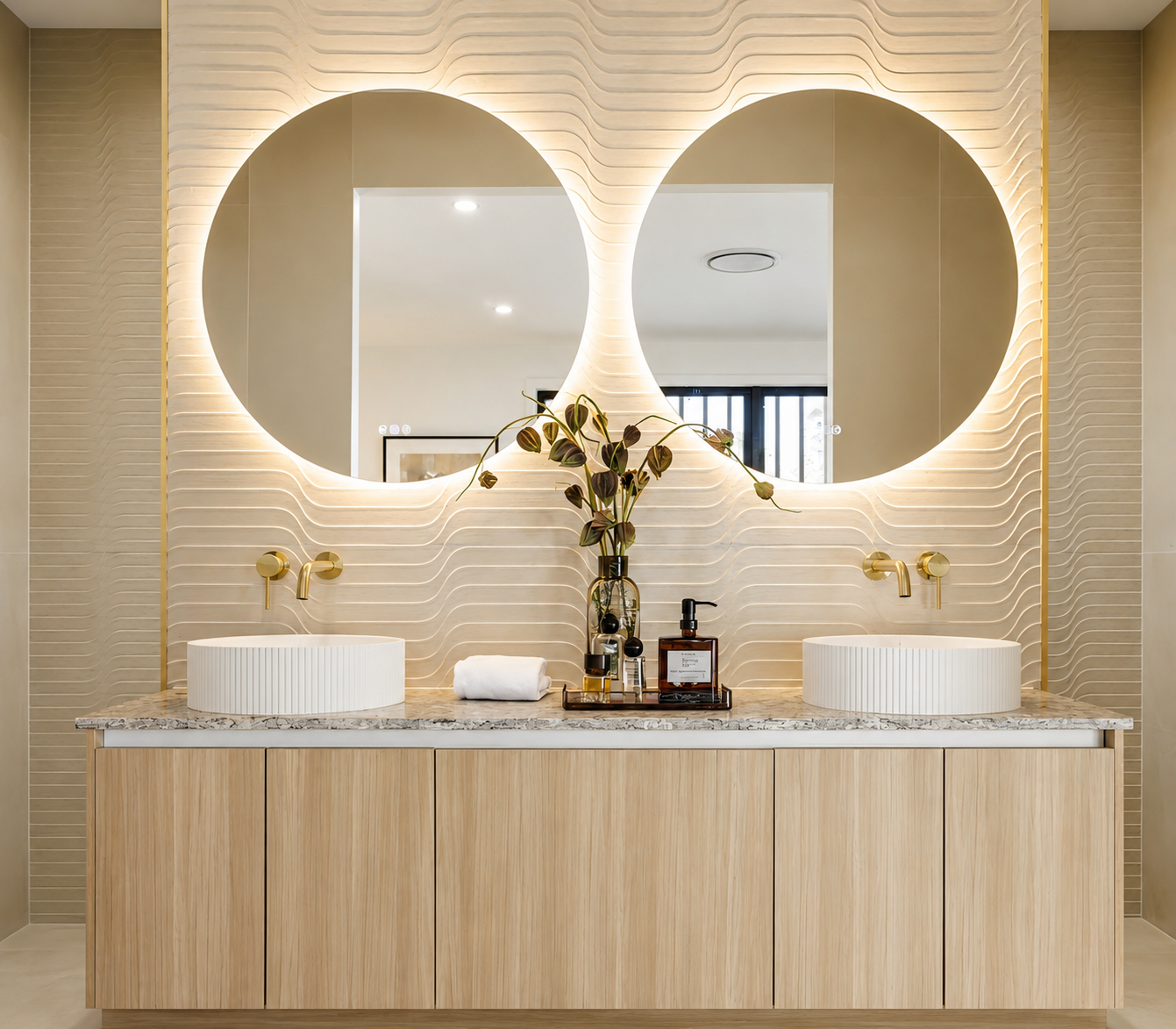
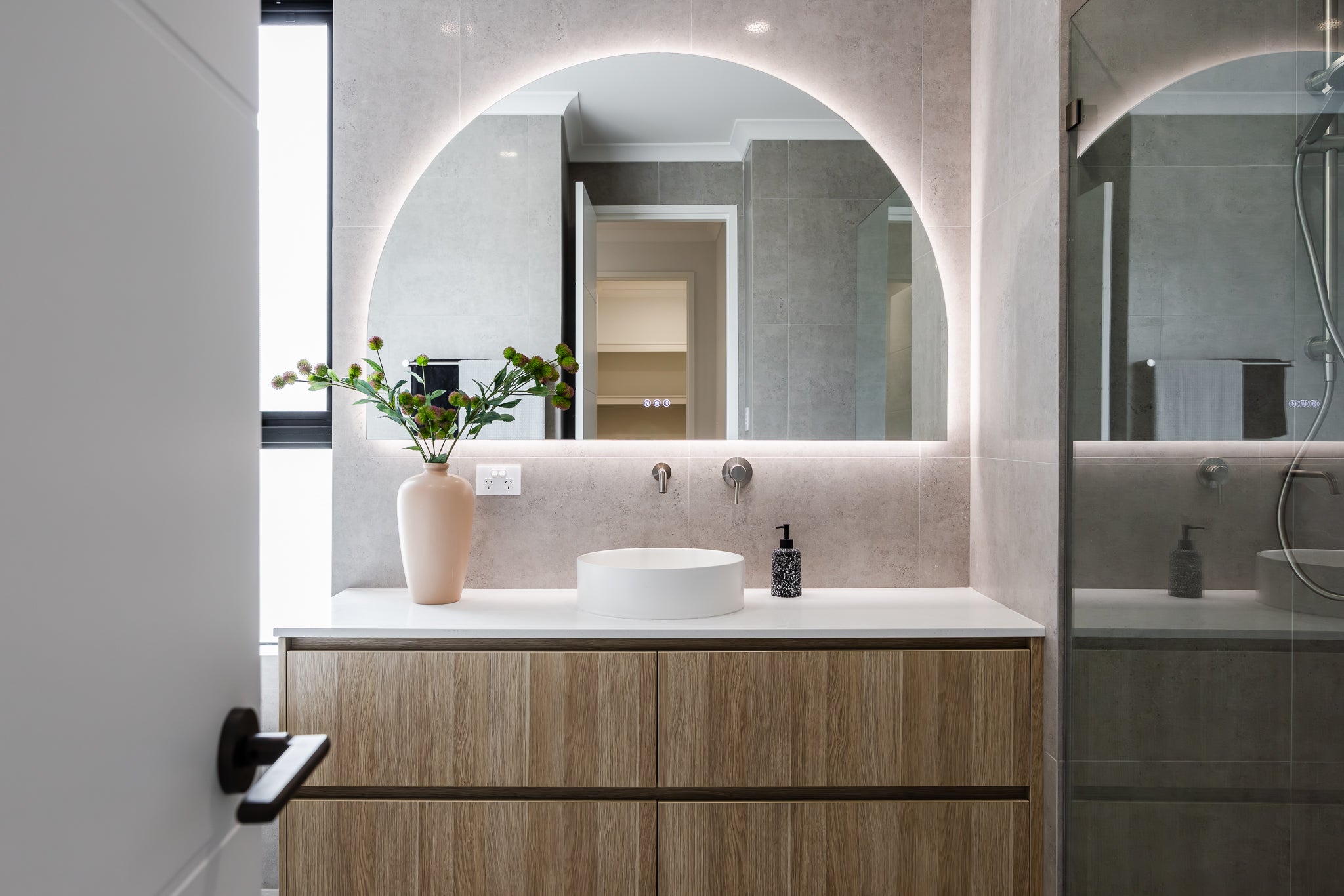



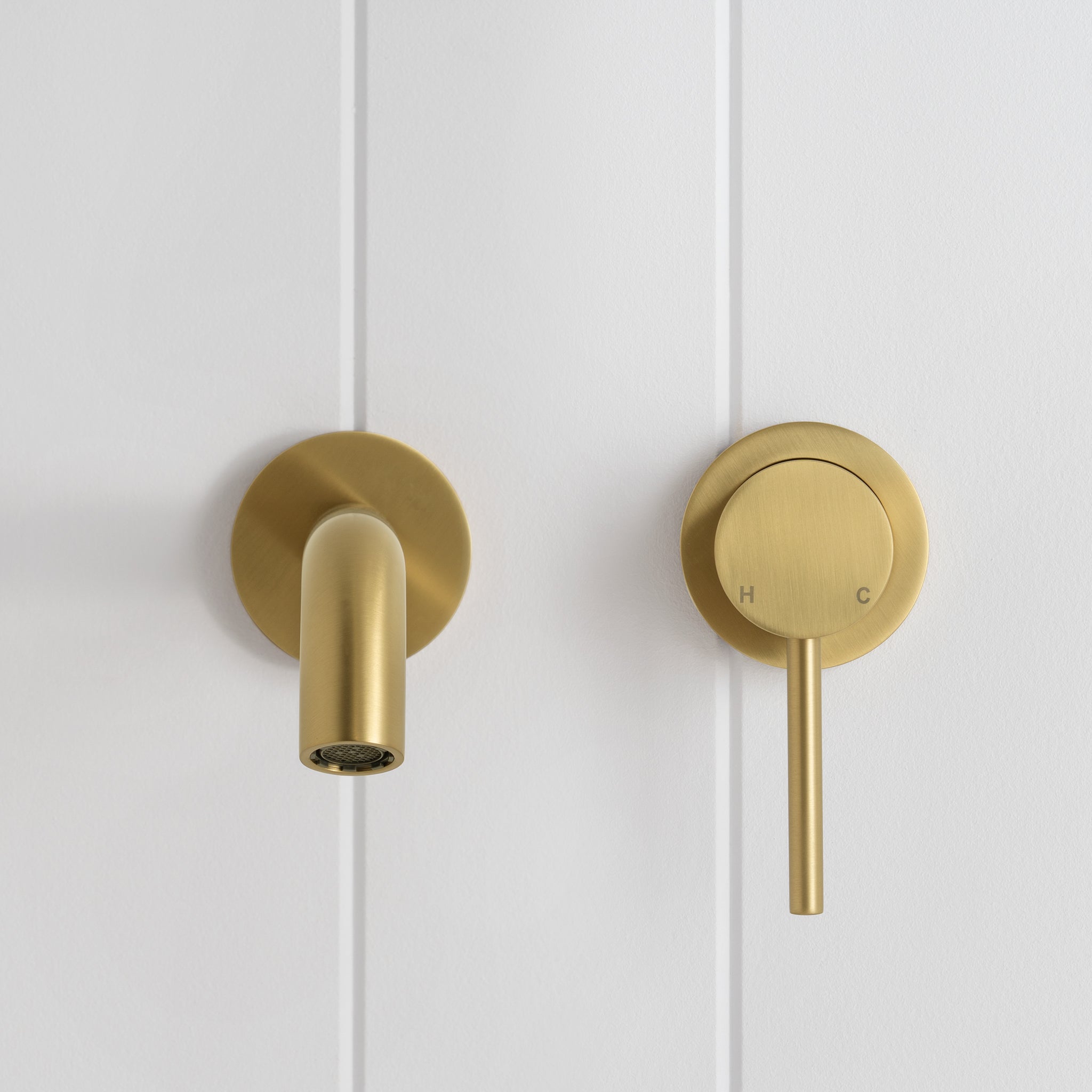
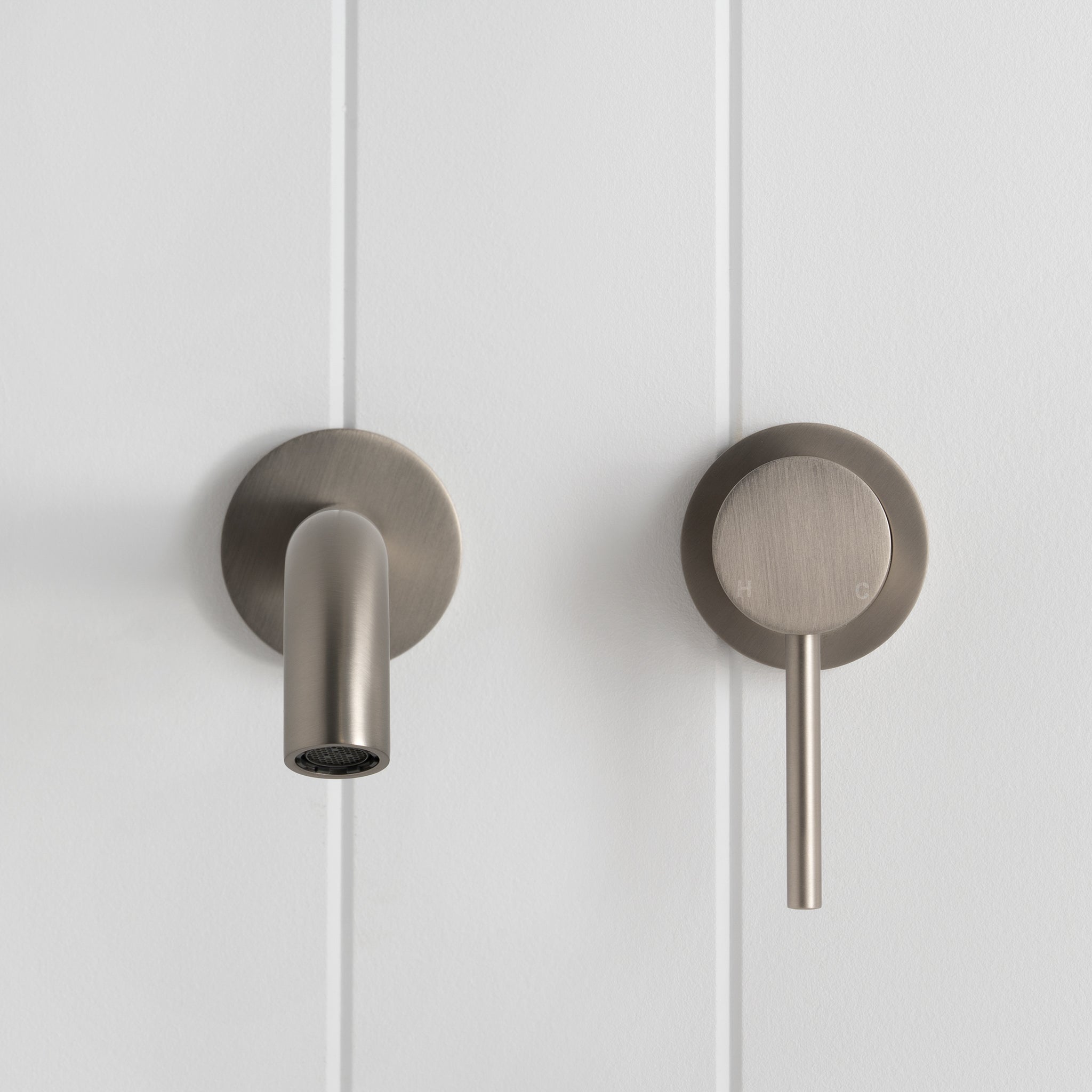
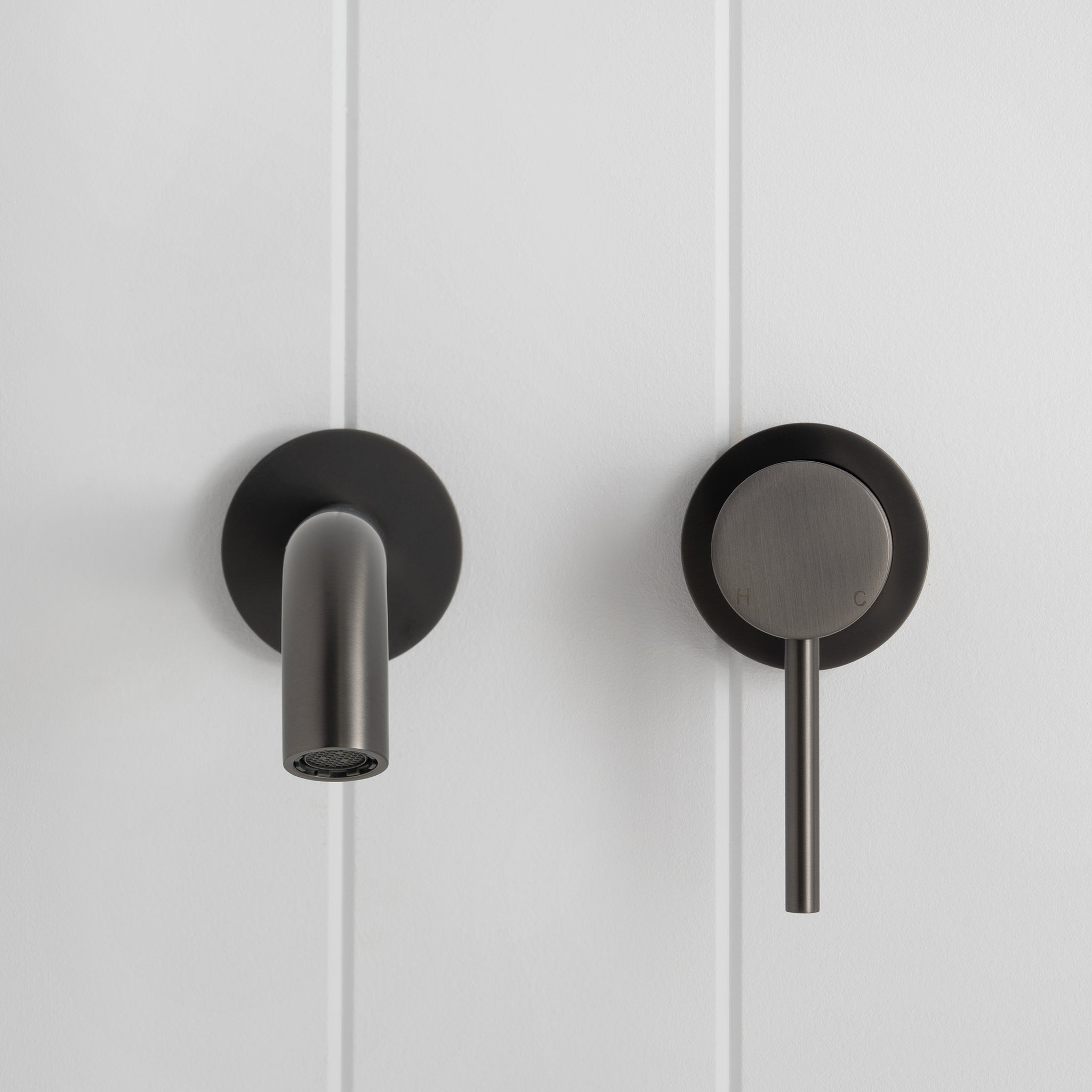
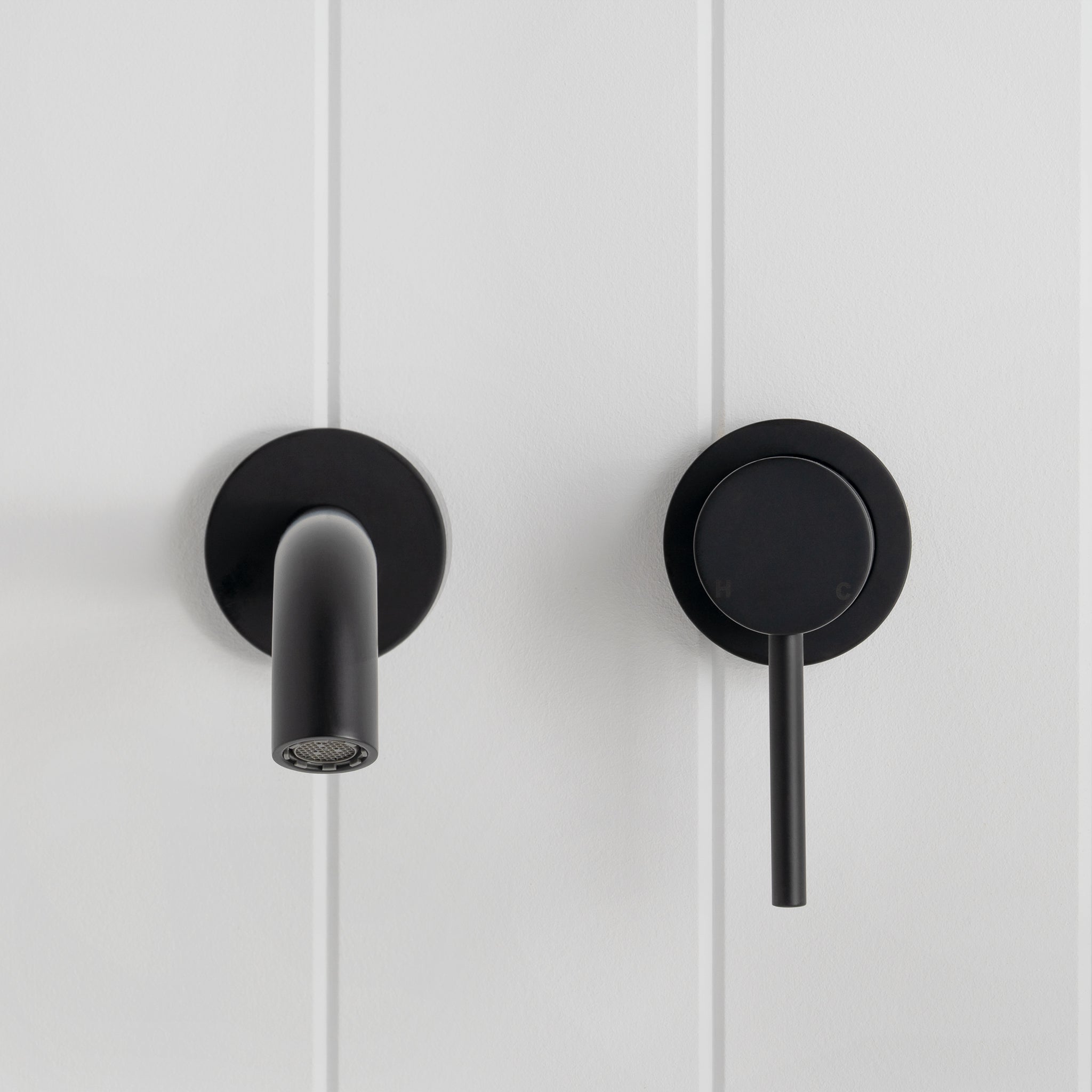
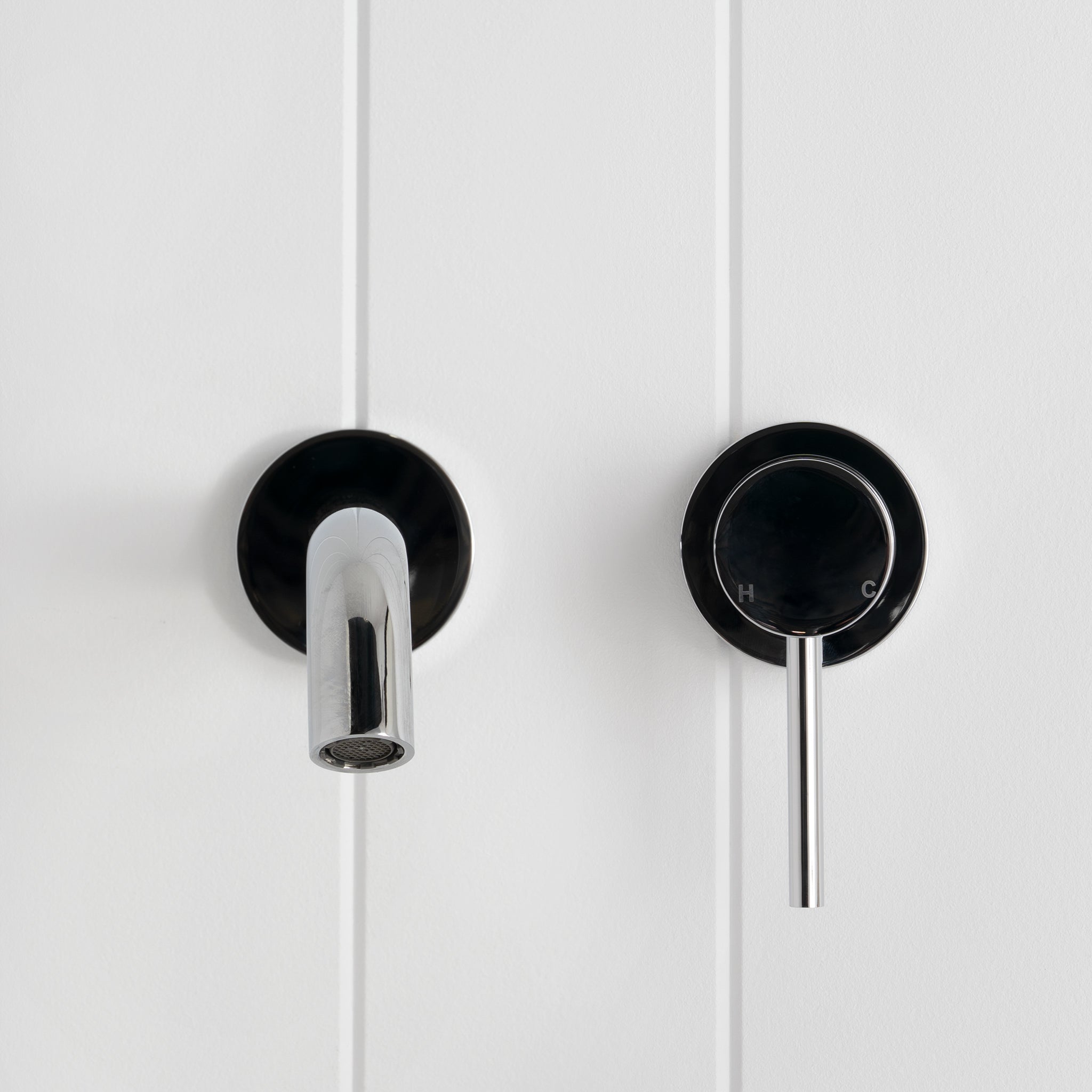


Choosing a design style before selecting a single product is one of the most valuable decisions in any bathroom renovation. It gives every subsequent choice — mirror shape, tapware finish, vanity profile, lighting warmth — a shared reference point, so the room reads as considered rather than assembled piece by piece. Homeowners who skip this step often find themselves unpicking decisions midway through a renovation, swapping a mirror or tapware finish that no longer fits once the bigger picture becomes clear.
This guide walks through the design styles most popular in Australian bathrooms today, what defines each one, and how mirrors, mirror cabinets, lighting, vanities, basins and tapware come together to create a cohesive, lasting result.
Why Trust InVogue Mirrors & Bathware? InVogue is an Australian retailer trusted in over 20,000 homes, specialising in LED bathroom mirrors, mirror cabinets and tapware across every major bathroom design style. The guidance in this article reflects genuine styling principles, not just passing trends.
Quick Answer
- Modern and Contemporary suit clean-lined, low-maintenance homes wanting a timeless, adaptable look.
- Coastal and Hamptons suit homes wanting a lighter, relaxed feel with a strong sense of place.
- Scandinavian and Japandi suit homes prioritising simplicity, warmth and function over decoration.
- Organic Modern, Industrial and Luxury Hotel suit homes wanting a more design-led, statement-driven bathroom.
Why Bathroom Style Matters
Committing to a style early creates visual consistency across the room, since every subsequent decision — mirror shape, tapware finish, vanity profile — can be measured against the same reference point rather than chosen in isolation. It also simplifies product selection considerably, narrowing thousands of possible combinations down to a manageable shortlist that already works together. A well-executed, cohesive style genuinely improves resale appeal, since buyers respond more strongly to a bathroom that feels intentional than one styled around whatever was on sale at the time. Finally, choosing a considered style rather than chasing a passing look helps avoid trend-driven mistakes that can date a renovation within a few short years.
Designer Insight: the most timeless bathrooms usually commit to one design language rather than borrowing elements from several. A room that mixes Hamptons shaker profiles with industrial black steel rarely feels as resolved as one that picks a direction and follows it through.
Popular Bathroom Design Styles
Modern
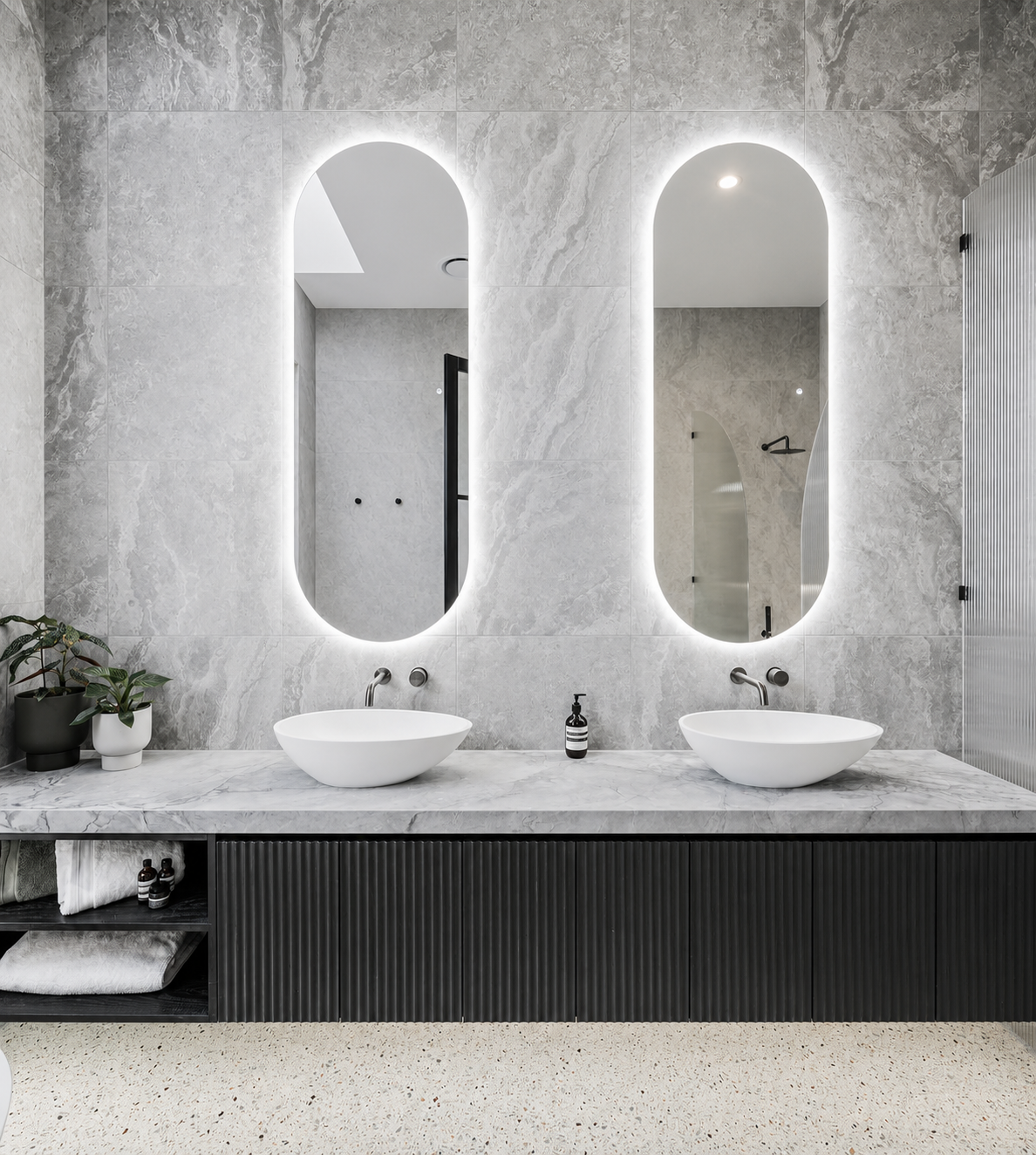
Modern bathrooms are defined by clean lines, minimal detailing and a restrained material palette, typically built around neutral tones with very little ornamentation. Surfaces are kept simple and uninterrupted, with storage and hardware designed to disappear into the overall composition rather than draw attention to themselves. Recommended mirror shapes lean rectangular and frameless, such as The Venice, which reinforces the clean-edged geometry the style is built around. Suitable tapware finishes include Chrome, Gunmetal and Matte Black, all of which support the pared-back, precise feel Modern bathrooms are known for.
Contemporary
Contemporary is often confused with Modern, but the two are meaningfully different: where Modern favours strict minimalism, Contemporary embraces layered materials and a slightly softer, more current interpretation of clean design. Organic forms — softened edges, rounded profiles — sit alongside straight lines, and the palette is more flexible, allowing warmer neutrals and the occasional accent tone. This makes Contemporary a popular choice for homeowners who want a fresh, current look without committing to the strict discipline Modern design demands.
Coastal
Coastal bathrooms build around soft whites, natural timbers and light stone, creating a relaxed, breezy feel that suits both beachside homes and inland properties wanting that same easy atmosphere. Brushed Nickel and Chrome are the natural tapware choices, keeping the palette light and avoiding the visual weight a darker finish would introduce. Rounded mirrors — such as The Amalfi — echo the soft, organic quality the rest of the room is built around, reinforcing the relaxed feel rather than cutting against it.
Hamptons
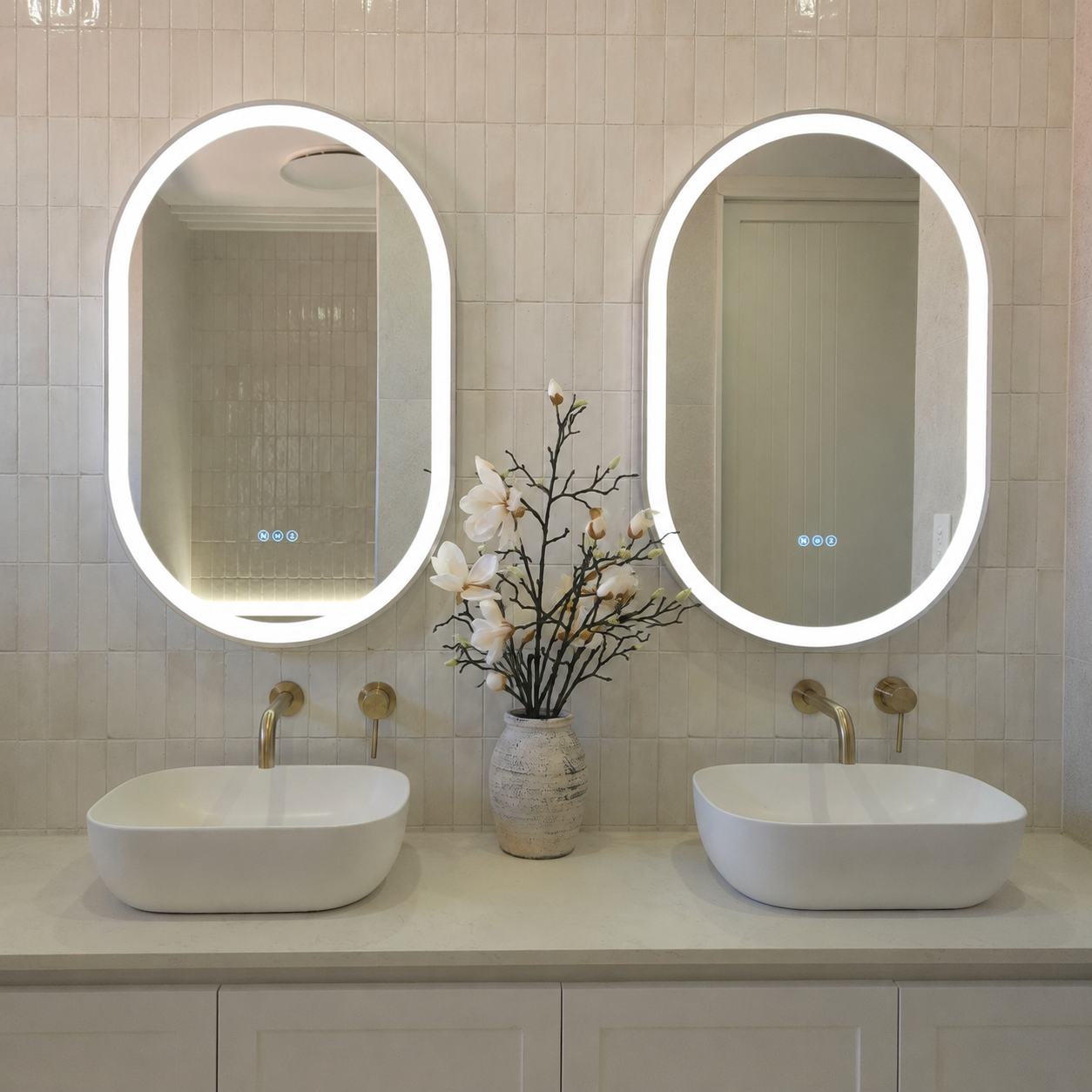
Hamptons style is built on shaker vanities with their characteristic recessed-panel doors, paired with marble or marble-look surfaces for a classic, elegant finish. Chrome or Brushed Nickel tapware keeps the palette timeless rather than trend-driven, and elegant proportions — slightly taller vanities, generous mirror framing — give the style its signature refined feel. A framed, softly shaped mirror such as The Valencia suits Hamptons particularly well, bringing definition without feeling heavy.
Scandinavian
Scandinavian design is grounded in simplicity and function, favouring light oak joinery and white walls to keep the space feeling calm and uncluttered. Every element is expected to earn its place, with functional design prioritised over decoration for its own sake. Frameless mirrors, such as The Verona, suit this style perfectly, contributing clean geometry without adding visual weight to the room.
Japandi
Japandi blends Japanese minimalism with Scandinavian warmth, producing a style built on warm minimalism rather than the starker, cooler restraint of pure Scandinavian design. Natural materials, soft curves and organic textures all feature heavily, creating a calm, considered atmosphere. Brushed Brass or Brushed Nickel tapware suits Japandi well, and a gently curved mirror such as The Onde or The Lune reinforces the soft, organic language the style is known for.
Organic Modern
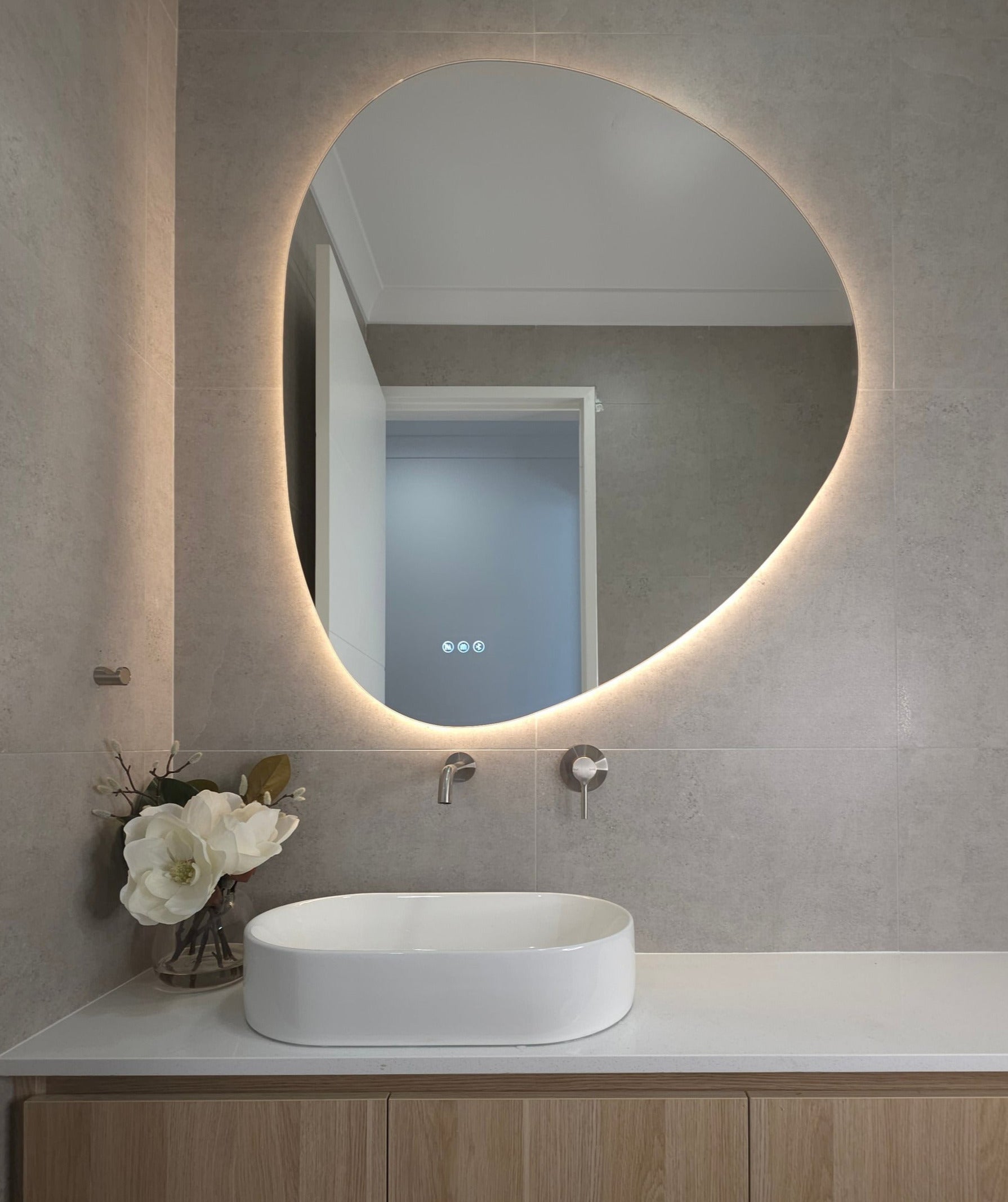
Organic Modern brings natural materials into a otherwise contemporary framework, favouring travertine and limestone for their warmth and texture. Curved mirrors, such as The Riviera, are a defining feature of the style, softening the room's geometry against the more structured elements around them. Warm metals and layered textures — a mix of stone, timber and soft metal finishes — give Organic Modern its distinctive, tactile feel.
Industrial
Concrete surfaces and black steel detailing anchor the Industrial style, paired with Gunmetal or Matte Black tapware to reinforce its darker, more architectural feel. Bold geometry — sharp edges, rectangular forms — suits the style far better than the softer, rounded shapes favoured elsewhere in this guide. A clean-lined frameless mirror in a dark finish complements the concrete and steel palette without competing with it.
Luxury Hotel
Luxury Hotel style is built around scale and atmosphere: oversized mirrors, such as The Santander, anchor the room, while layered lighting — ambient, task and accent layers working together — creates the enveloping mood the style depends on. Statement stone and other premium finishes reinforce the sense of occasion, and symmetry across the vanity, mirrors and lighting gives the room its polished, considered feel.
Designer Insight: restrained styling often feels more luxurious than excessive decoration. Even within Luxury Hotel design, the most successful bathrooms rely on a small number of well-chosen statement pieces rather than layering in every premium finish available.


Choosing the Right Style for Your Home
The home's existing architecture is often the strongest starting point — a Federation or Victorian home naturally leans toward Hamptons or traditional detailing, while a new-build townhouse suits Modern or Contemporary far more comfortably. Lifestyle matters just as much: a busy family bathroom benefits from the low-fuss practicality of Scandinavian or Modern design, while a considered adults-only ensuite can support the layered detail of Luxury Hotel or Organic Modern styling. Maintenance preferences should also inform the decision, since natural stone and timber-look finishes generally ask for more routine care than engineered surfaces and simpler profiles. Natural light changes how every style reads in practice — darker Industrial palettes need strong natural or artificial light to avoid feeling heavy, while light-filled Coastal and Scandinavian schemes can carry a dimmer room more comfortably. Budget plays a practical role too, since statement stone and premium hardware carry a different price point to simpler, pared-back finishes. Finally, longevity is worth weighing seriously: styles built on enduring materials and restrained detailing tend to outlast those built around a single trend-driven moment.
Designer Insight: natural materials age more gracefully than trend-driven finishes. Timber, stone and brass all develop a genuine patina over time, while heavily trend-led colours and finishes tend to look dated the moment the trend itself moves on.
It's also worth considering how the household expects to use the bathroom day to day — a style chosen purely for its visual appeal can quickly feel impractical if it doesn't support the household's actual routine, storage needs or cleaning habits.
Coordinating Fixtures Within Each Style
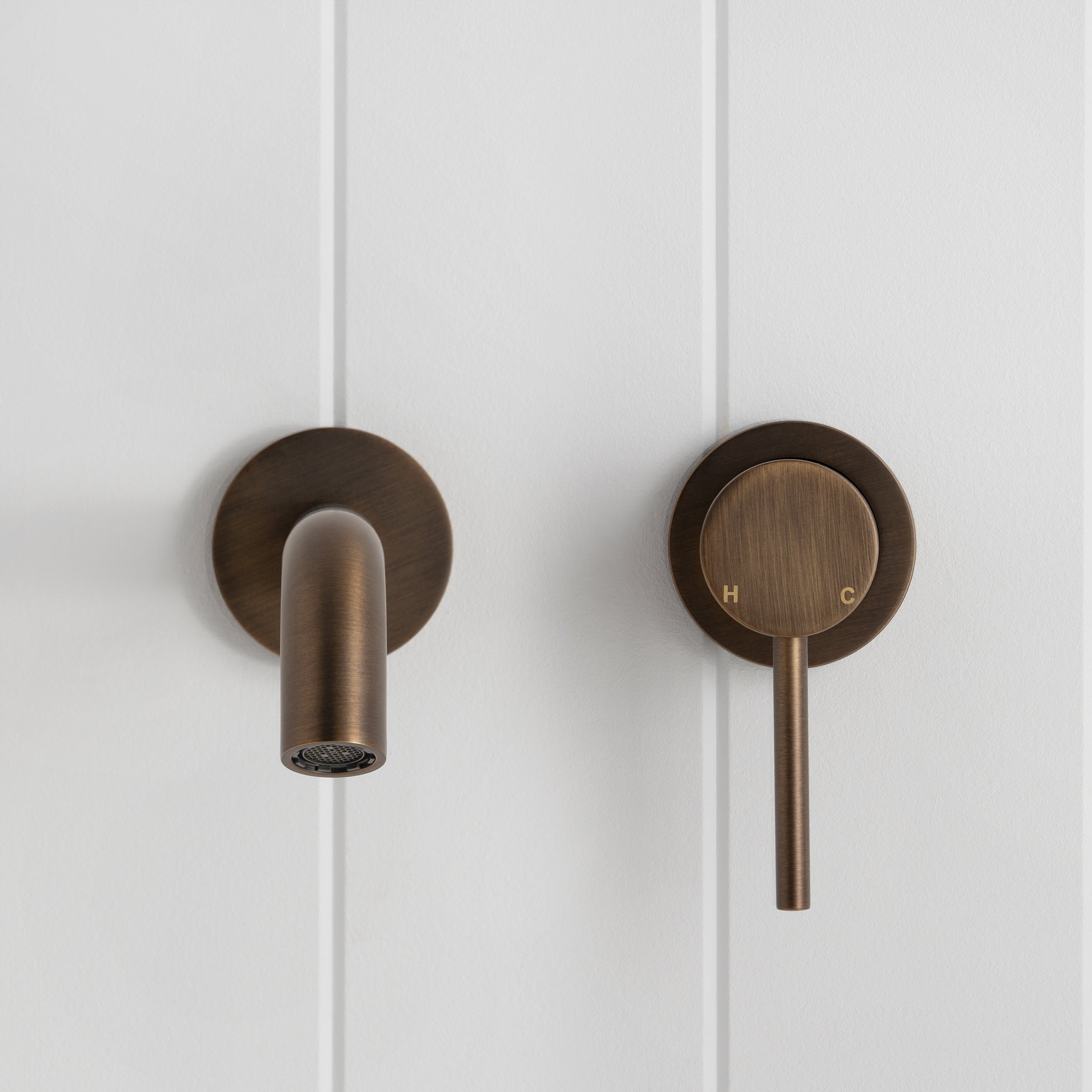
Each design style shapes every product decision that follows. Mirrors should echo the style's defining geometry — rounded for Coastal and Organic Modern, rectangular and frameless for Modern and Scandinavian, arched and oversized for Luxury Hotel. Mirror cabinets follow the same logic while adding practical storage, and should be chosen in a shape and finish that matches the open mirrors used elsewhere in the home. Vanities carry much of the style's visual weight — shaker profiles for Hamptons, simple flat-panel joinery for Scandinavian and Modern, curved or organic forms for Japandi and Organic Modern. Basins should follow the vanity's lead, with softer vessel forms suiting Coastal and Organic Modern, and integrated or undermount basins suiting Modern and Contemporary. Tapware finish is one of the most important consistency markers in the entire room, and should be selected before most other hardware decisions are finalised. Lighting warmth should support the palette rather than fight it — warmer light for Hamptons, Coastal and Japandi, cooler light for Modern and Industrial. Accessories — towel rails, robe hooks, soap dispensers — should always match the tapware finish rather than being treated as an afterthought.
For the complete mirror-selection process, see our Ultimate Bathroom Mirror Buying Guide; for tapware finish and type selection, see our Bathroom Tapware Buying Guide; for vanity sizing and materials, see our Bathroom Vanity Buying Guide; and for layering ambient, task and accent lighting correctly, see our Bathroom Lighting Guide.
Common Design Mistakes
- Mixing conflicting styles: combining shaker vanities with industrial black steel rarely resolves into a cohesive look.
- Following short-lived trends: a style chosen purely for its current popularity often feels dated within a few years.
- Too many feature finishes: combining several metal tones or statement materials competes for attention rather than working together.
- Ignoring proportions: an oversized mirror or vanity can overwhelm a smaller room, just as an undersized piece can look lost in a larger one.
- Overdecorating small bathrooms: heavily detailed styles like Luxury Hotel can feel cramped rather than luxurious in a compact footprint.
Expert Designer Recommendations
Designer's Rules
- Choose a style based on the home's architecture and how the household actually lives, not on a single inspiration photo.
- Commit to one design language rather than blending several across the same room.
- Select tapware finish early, since it influences almost every other decision that follows.
- Favour restraint over excess — most styles feel more luxurious with fewer, better-chosen elements.
Comparison Tables
Design Style → Key Characteristics
| Style | Key Characteristics |
|---|---|
| Modern | Clean lines, minimal detailing, neutral palette |
| Contemporary | Layered materials, organic forms, flexible palette |
| Coastal | Soft whites, natural timber, light stone |
| Hamptons | Shaker vanities, marble, elegant proportions |
| Scandinavian | Simplicity, light oak, functional design |
| Japandi | Warm minimalism, natural materials, soft curves |
| Organic Modern | Travertine, limestone, curved mirrors |
| Industrial | Concrete, black steel, bold geometry |
| Luxury Hotel | Oversized mirrors, layered lighting, symmetry |
Style → Recommended Mirror Shape
| Style | Recommended Mirror Shape |
|---|---|
| Modern | Rectangular, frameless |
| Contemporary | Rectangular with softened edges |
| Coastal | Round |
| Hamptons | Framed oval or arch |
| Scandinavian | Frameless rectangular |
| Japandi | Curved, organic |
| Organic Modern | Curved, irregular |
| Industrial | Rectangular, sharp-edged |
| Luxury Hotel | Oversized arch |
Style → Best Tapware Finish
| Style | Best Tapware Finish |
|---|---|
| Modern | Chrome, Gunmetal, Matte Black |
| Contemporary | Brushed Nickel, Chrome |
| Coastal | Brushed Nickel, Chrome |
| Hamptons | Chrome, Brushed Nickel |
| Scandinavian | Chrome, Brushed Nickel |
| Japandi | Brushed Brass, Brushed Nickel |
| Organic Modern | Brushed Brass, Antique Brass |
| Industrial | Gunmetal, Matte Black |
| Luxury Hotel | Brushed Brass, Antique Brass |
Style → Recommended Vanity
| Style | Recommended Vanity |
|---|---|
| Modern | Flat-panel, floating |
| Contemporary | Flat-panel with textured finish |
| Coastal | Timber-look, floor-standing |
| Hamptons | Shaker, floor-standing |
| Scandinavian | Light oak, floating |
| Japandi | Timber, floating with soft edges |
| Organic Modern | Stone-look, curved profile |
| Industrial | Concrete-look, floating |
| Luxury Hotel | Statement stone, floor-standing |
Style → Maintenance Level
| Style | Maintenance Level |
|---|---|
| Modern | Low |
| Contemporary | Low |
| Coastal | Moderate — natural timber care |
| Hamptons | Moderate — marble care |
| Scandinavian | Low |
| Japandi | Moderate |
| Organic Modern | Moderate — natural stone care |
| Industrial | Low |
| Luxury Hotel | Moderate to high — statement stone |
Style → Ideal Colour Palette
| Style | Ideal Colour Palette |
|---|---|
| Modern | Neutral greys, whites |
| Contemporary | Warm neutrals with soft accents |
| Coastal | Soft white, sand, light blue |
| Hamptons | White, soft grey, navy accents |
| Scandinavian | White, light oak, soft grey |
| Japandi | Warm neutrals, soft charcoal |
| Organic Modern | Warm stone tones, soft taupe |
| Industrial | Charcoal, concrete grey, black |
| Luxury Hotel | Deep stone tones, warm metallics |
Frequently Asked Questions
What is the most timeless bathroom style?
Modern, Scandinavian and Hamptons tend to age the most gracefully, since each is built on restrained, enduring materials rather than a single passing trend.
Which bathroom style adds the most value?
Modern, Contemporary and Hamptons styles tend to appeal to the widest range of buyers, making them a safer choice where resale value is a priority.
Is Japandi still popular?
Yes, Japandi remains a strong choice for homeowners wanting warmth and simplicity together, and its reliance on natural materials over passing trends gives it real staying power.
How do I mix modern and coastal styles?
Keep the clean lines and neutral palette of Modern design, then introduce Coastal warmth through natural timber and a softer, rounded mirror shape rather than mixing hardware finishes.
What mirrors suit Hamptons bathrooms?
Framed, softly shaped mirrors such as The Valencia suit Hamptons particularly well, bringing definition and classic proportion without feeling heavy.
Can I combine different tapware finishes?
It's generally best to repeat one finish throughout the room — combining several tends to read as inconsistency rather than intentional layering, regardless of the style chosen.
Designer's Cheat Sheet
Designer's Cheat Sheet
- ✔ Want low-maintenance and timeless? → Modern or Scandinavian
- ✔ Want a relaxed, easy feel? → Coastal or Hamptons
- ✔ Want warmth and simplicity together? → Japandi
- ✔ Want a design-led statement? → Organic Modern or Industrial
- ✔ Want scale and atmosphere? → Luxury Hotel
Conclusion
Timeless bathrooms succeed because every element works together — from the overall design style through to the mirror, lighting, vanity and tapware chosen to support it. A style selected thoughtfully at the outset makes every later decision easier and helps the finished room remain beautiful and functional for years, rather than feeling dated within a single renovation cycle.
Ready to bring your chosen style to life? Explore our complete Smart Mirrors, Mirror Cabinets and Bathroom Tapware collections, or browse our Best Sellers if you're not sure where to start.
Where To Next?
- Start here: The Ultimate Bathroom Mirror Buying Guide (2026 Edition)
- Related guides: Bathroom Vanity Buying Guide, Bathroom Tapware Buying Guide, Bathroom Lighting Guide, How to Plan the Perfect Bathroom Layout, Bathroom Storage Ideas: 23 Smart Ways to Create a More Organised Bathroom, Bathroom Renovation Mistakes: 21 Costly Mistakes to Avoid Before You Build and Bathroom Mirror Ideas: 25 Designer-Approved Ideas for Every Bathroom Style
- Explore: the full Smart Mirrors range
- Need storage: the full Mirror Cabinets range
- Browse: the full Bathroom Tapware range
- Not sure where to start: our Best Sellers


