


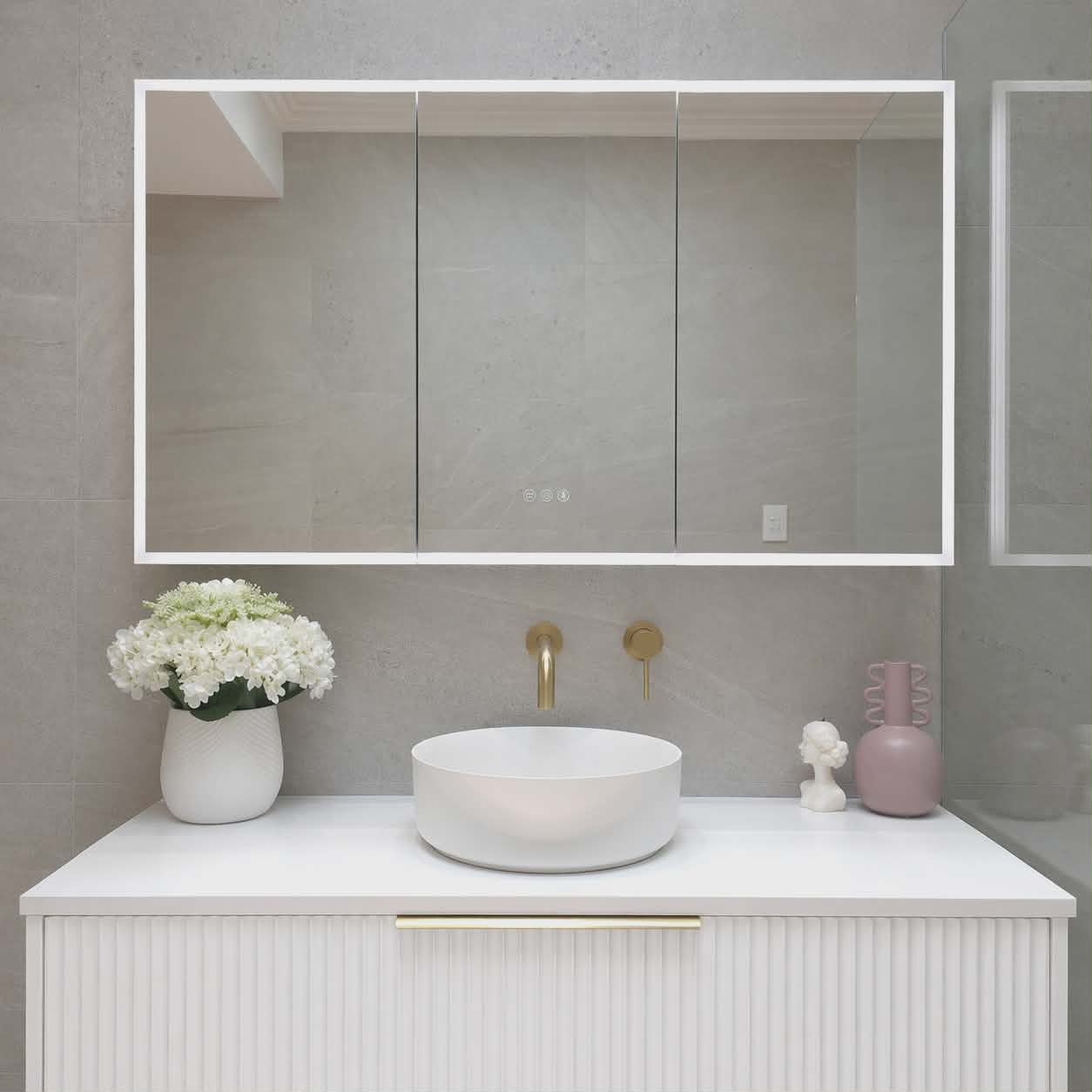

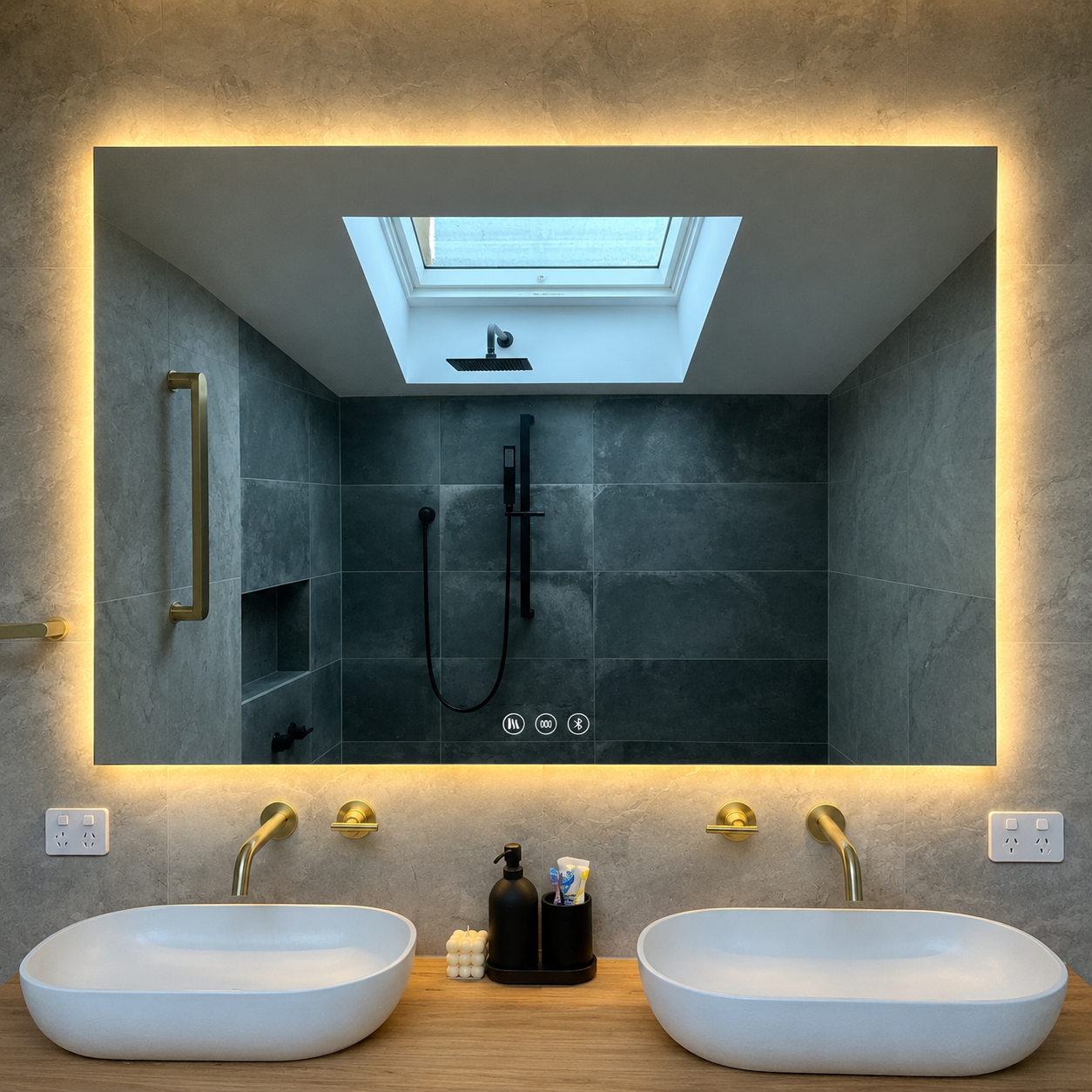
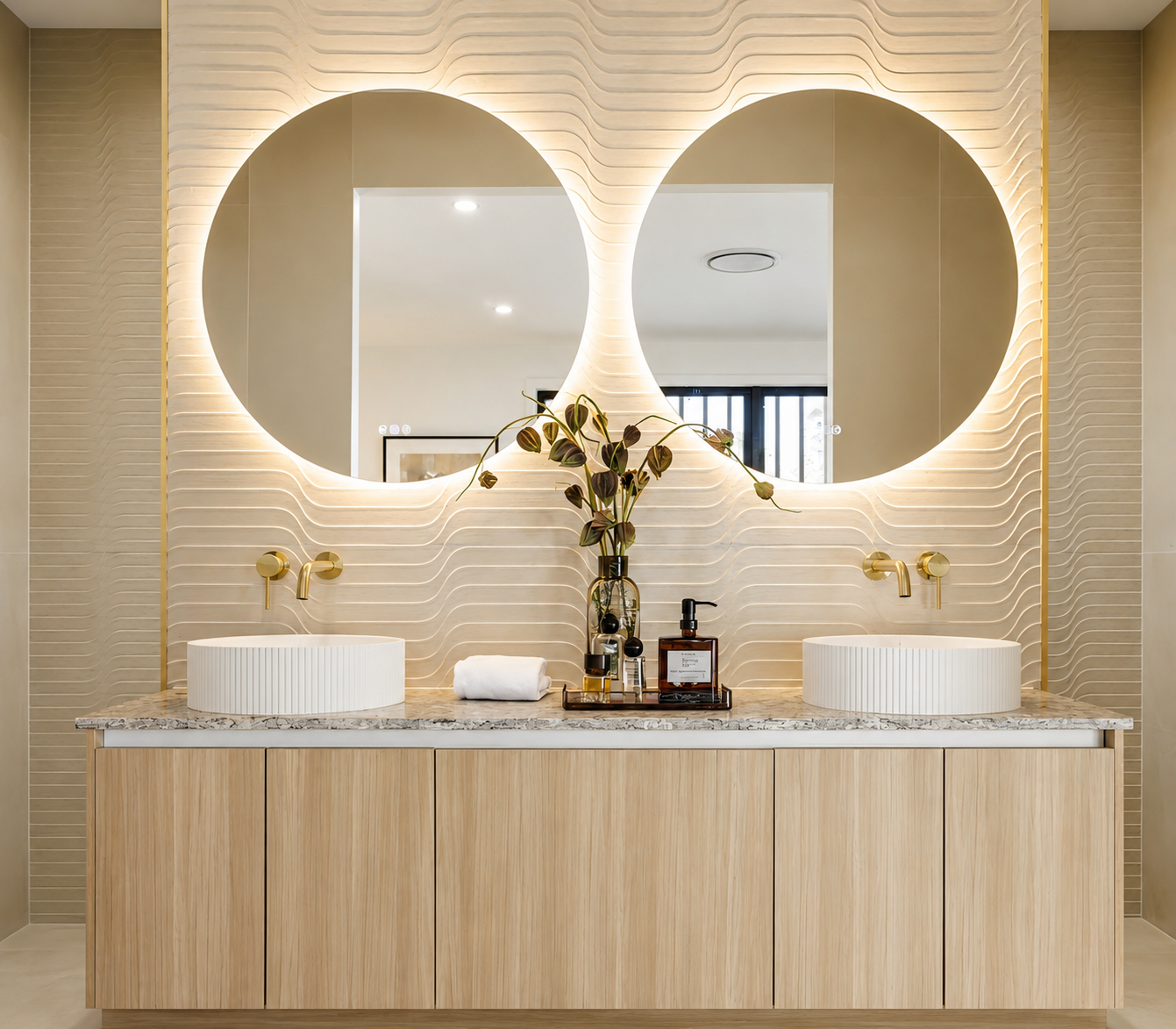
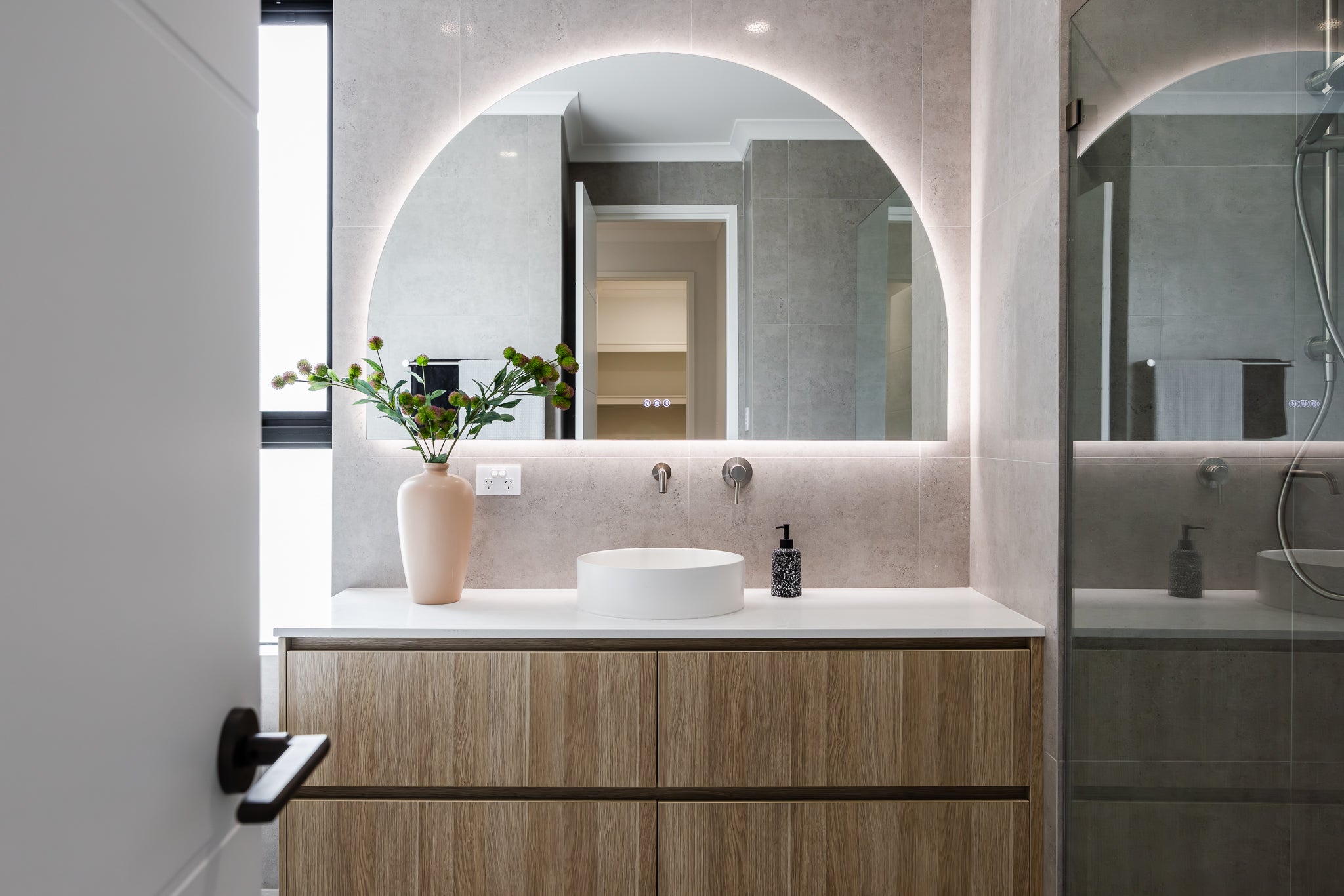




Modern design remains one of Australia's most enduring bathroom renovation styles, and for good reason. Rather than chasing a passing look, it's built on principles — simplicity, proportion, restraint — that don't date the way trend-driven colours and finishes tend to. Focusing on these timeless fundamentals rather than whatever is fashionable this year consistently leads to a bathroom homeowners are still happy with a decade later.
Because modern design relies on so few decorative distractions, every remaining decision carries more visual weight than it would in a more ornate style. The proportions of the vanity, the shape of the mirror, the finish of the tapware — each is more exposed to scrutiny when there's nothing else in the room to soften it, which is exactly why getting these fundamentals right matters so much.
This guide walks through exactly what defines a modern bathroom, the materials, colours, mirrors, tapware and lighting that bring the look together, and how to avoid the mistakes that quietly undermine an otherwise well-planned modern space.
Why Trust InVogue Mirrors & Bathware? InVogue is an Australian retailer trusted in over 20,000 homes, specialising in LED bathroom mirrors, mirror cabinets and tapware suited to modern and contemporary bathroom design. The guidance in this article reflects genuine design principles, not just current trends.
Quick Answer
- Keep lines clean and detailing minimal — modern design relies on restraint, not decoration.
- Choose a neutral palette and let material texture do the visual work instead of colour.
- Layer lighting across ambient, task and accent sources rather than relying on one overhead fitting.
- Repeat one tapware finish throughout the room to keep the look cohesive.
What Defines a Modern Bathroom?
Simplicity sits at the core of modern design — every element is expected to earn its place rather than exist purely for decoration. Clean lines run through the vanity, mirror and tapware selection, favouring straight edges and precise geometry over ornamentation. Functional layouts prioritise everyday usability, positioning storage and fixtures around how the space is actually used rather than how it photographs. High-quality materials matter more in modern design than in almost any other style, since there's little detailing to distract from a surface that doesn't perform well over time. A neutral colour palette — whites, greys, warm timbers — creates the calm, uncluttered backdrop modern design depends on. Layered lighting brings depth to a space that could otherwise feel flat, and minimal visual clutter keeps the overall composition feeling considered rather than busy.
Designer Insight: modern bathrooms feel luxurious because every element has a purpose. There's no filler detailing to distract from the quality of what's actually there, which is precisely why the materials and finishes chosen need to be exceptional.

Choosing Materials for a Modern Bathroom
Large-format porcelain tiles reduce grout lines and create an uninterrupted surface that reads as calm and considered, making them one of the most popular choices for modern floors and walls. Microcement offers a seamless, textural finish with virtually no joins, suiting bathrooms wanting a soft, monolithic look. Natural stone brings authentic texture and variation, though it typically demands more routine sealing and care than engineered alternatives. Engineered stone delivers a similar visual result with far greater consistency and lower maintenance, making it a practical choice for busy households. Timber-look joinery introduces warmth without the moisture sensitivity of real timber, an important consideration in a wet area. Matte finishes across tiles, joinery and tapware suit modern design particularly well, softening reflections and reducing the appearance of water marks and fingerprints. Textured surfaces — fluted joinery, subtle stone veining — add visual interest without introducing additional colour, which is precisely the balance modern design is built around.
Durability and maintenance should weigh heavily in every material decision. Engineered stone and large-format porcelain generally outperform natural stone and microcement on day-to-day upkeep, while still delivering the visual impact modern design depends on. Visual impact and practicality don't need to be traded off against each other, provided the material is matched correctly to how the household actually uses the space.
Choosing the Right Colour Palette
White and oak creates a warm, light-filled palette that suits almost any modern bathroom, particularly those with generous natural light. Greige and brushed nickel offers a slightly warmer, more adaptable neutral than pure white and grey, pairing comfortably with both cool and warm accents. Soft grey and matte black introduces contrast and definition, suiting bathrooms wanting a sharper, more graphic modern look. Travertine and brushed brass brings warmth and texture together, softening the more clinical edge that modern design can sometimes carry. Charcoal and gunmetal creates a deeper, more dramatic palette, best suited to bathrooms with strong natural or artificial light to prevent the space from feeling heavy.
Colour influences both mood and perceived space in ways that are easy to underestimate. Lighter palettes tend to make a bathroom feel larger and calmer, while darker combinations create intimacy and drama but can shrink the perceived footprint of a smaller room if not balanced with adequate lighting.
Designer Insight: the most timeless modern bathrooms rely on proportion rather than decoration. A well-sized mirror centred correctly above a vanity of the right scale will always outperform a beautifully decorated but poorly proportioned room.


Selecting the Perfect Mirror
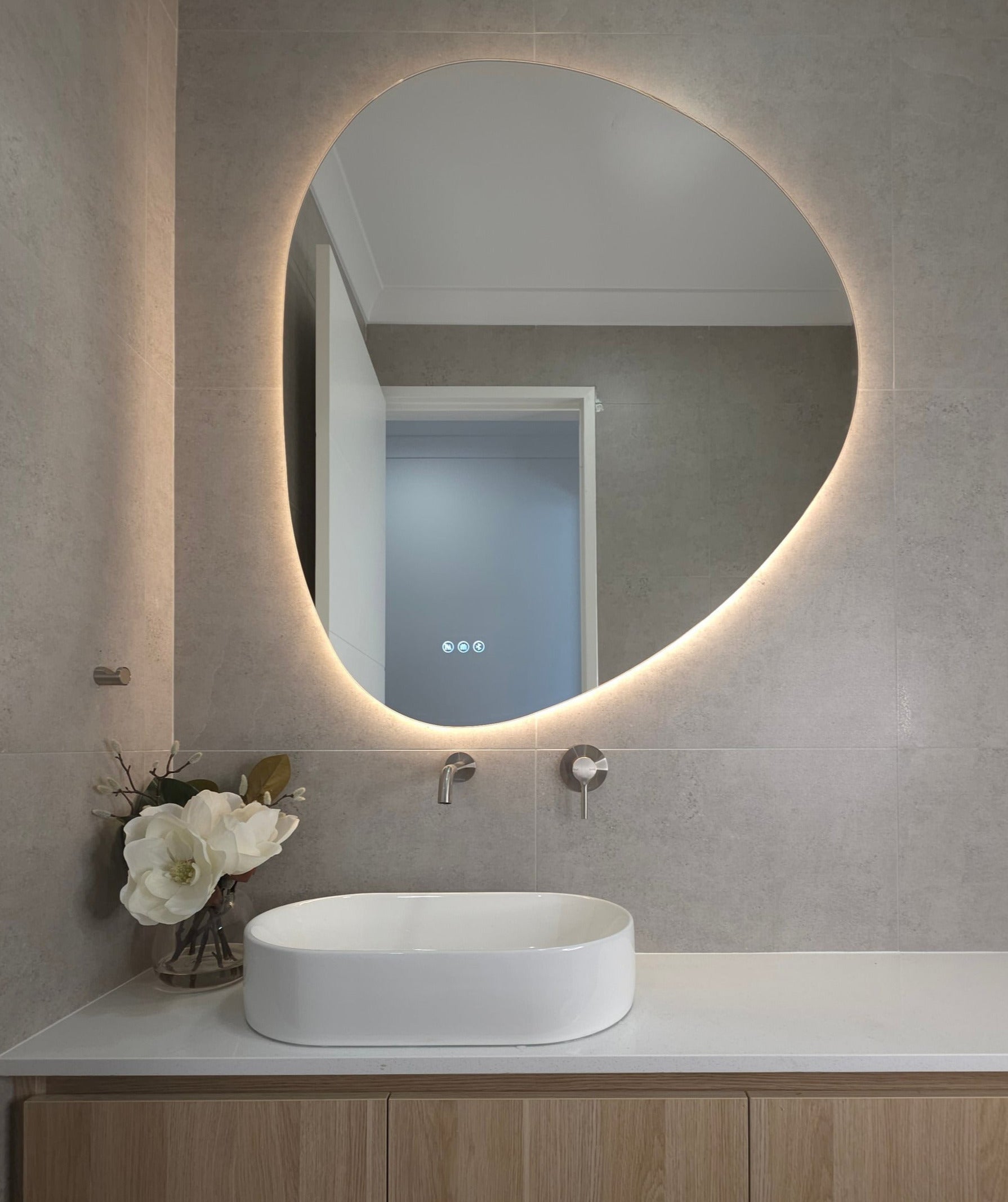
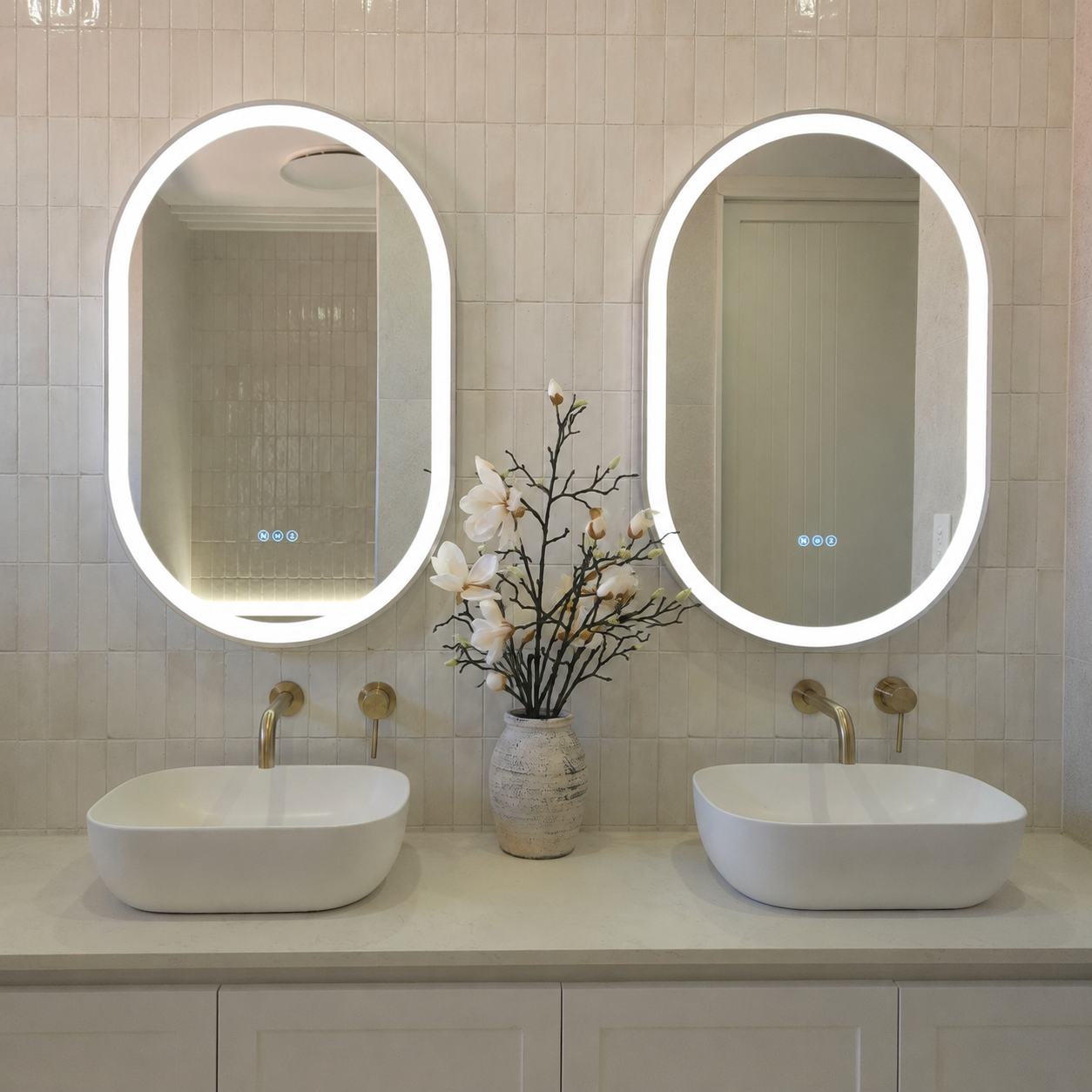
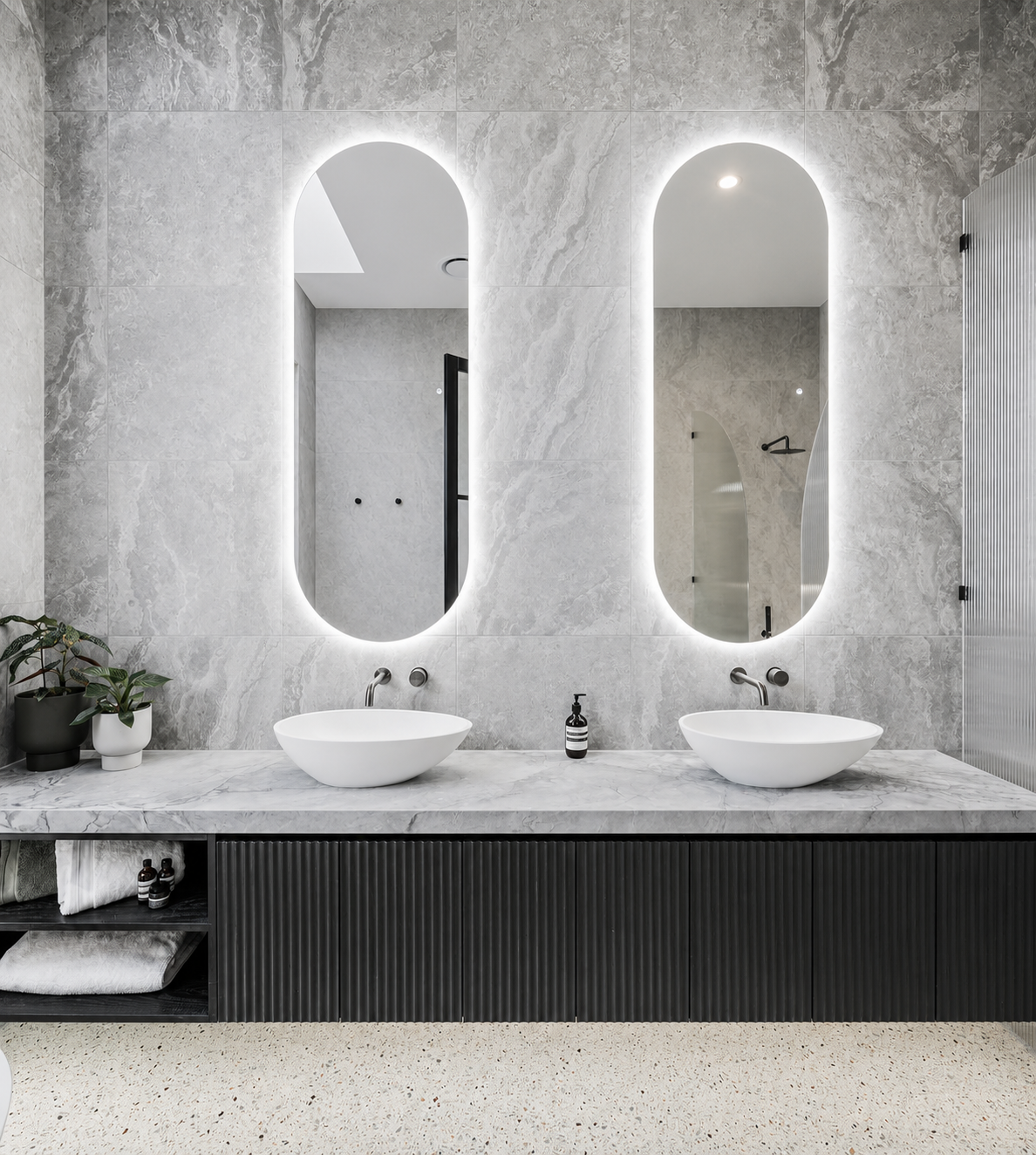
Frameless LED mirrors, such as The Venice, are the most common choice in modern bathrooms, their clean edges reinforcing the style's core geometry without adding visual weight. Arched mirrors, including The Positano, introduce a single soft curve against an otherwise linear room, a popular way to add gentle contrast without breaking from the modern aesthetic. Rounded rectangles, such as The Florence, offer a middle ground between strict geometry and complete softness, suiting bathrooms that want to soften the look slightly without moving into a different style altogether. Full-length mirrors, such as The Palmero, suit larger modern bathrooms and ensuites where a second mirror adds both function and scale, particularly useful in a shared or family bathroom. Mirror cabinets provide hidden storage while maintaining the clean, uncluttered surface modern design relies on, keeping toiletries and everyday items out of sight and reinforcing the sense of calm the style is built around.
For the complete mirror-selection process, see our Ultimate Bathroom Mirror Buying Guide; for a full breakdown of shape and proportion, see our Mirror Shape Guide; and for cabinet-specific guidance, see our Mirror Cabinet Buying Guide.

Choosing Tapware for a Modern Bathroom
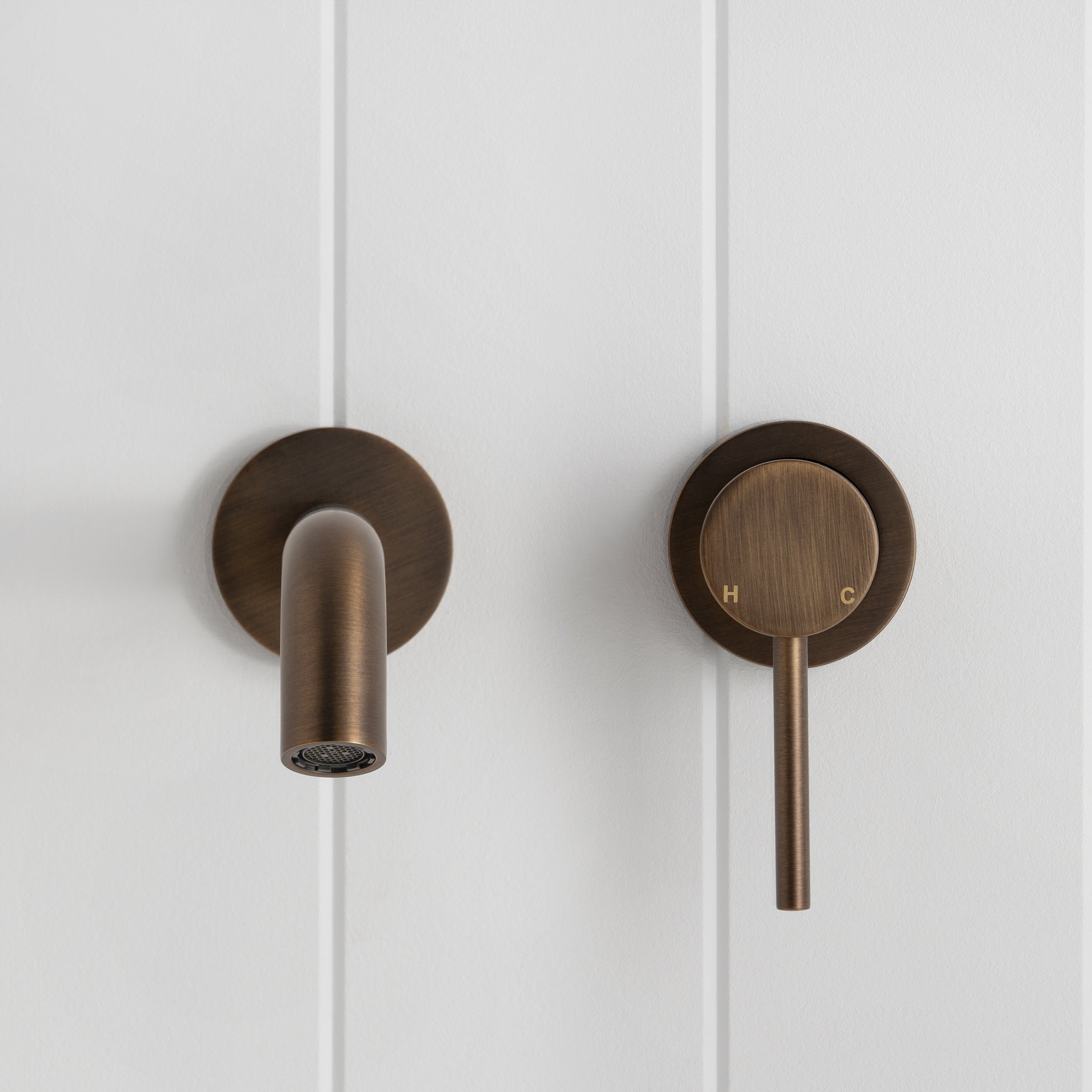
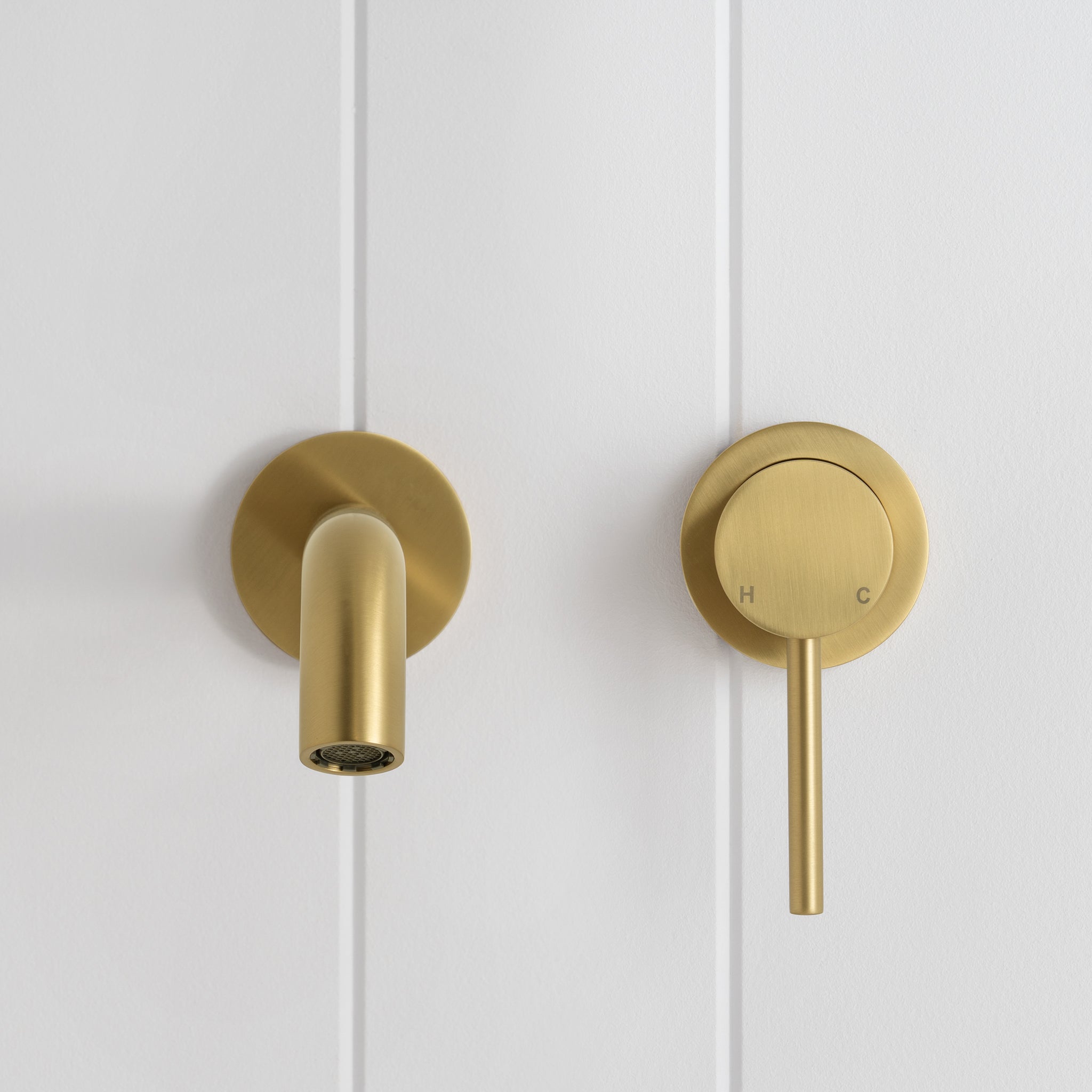
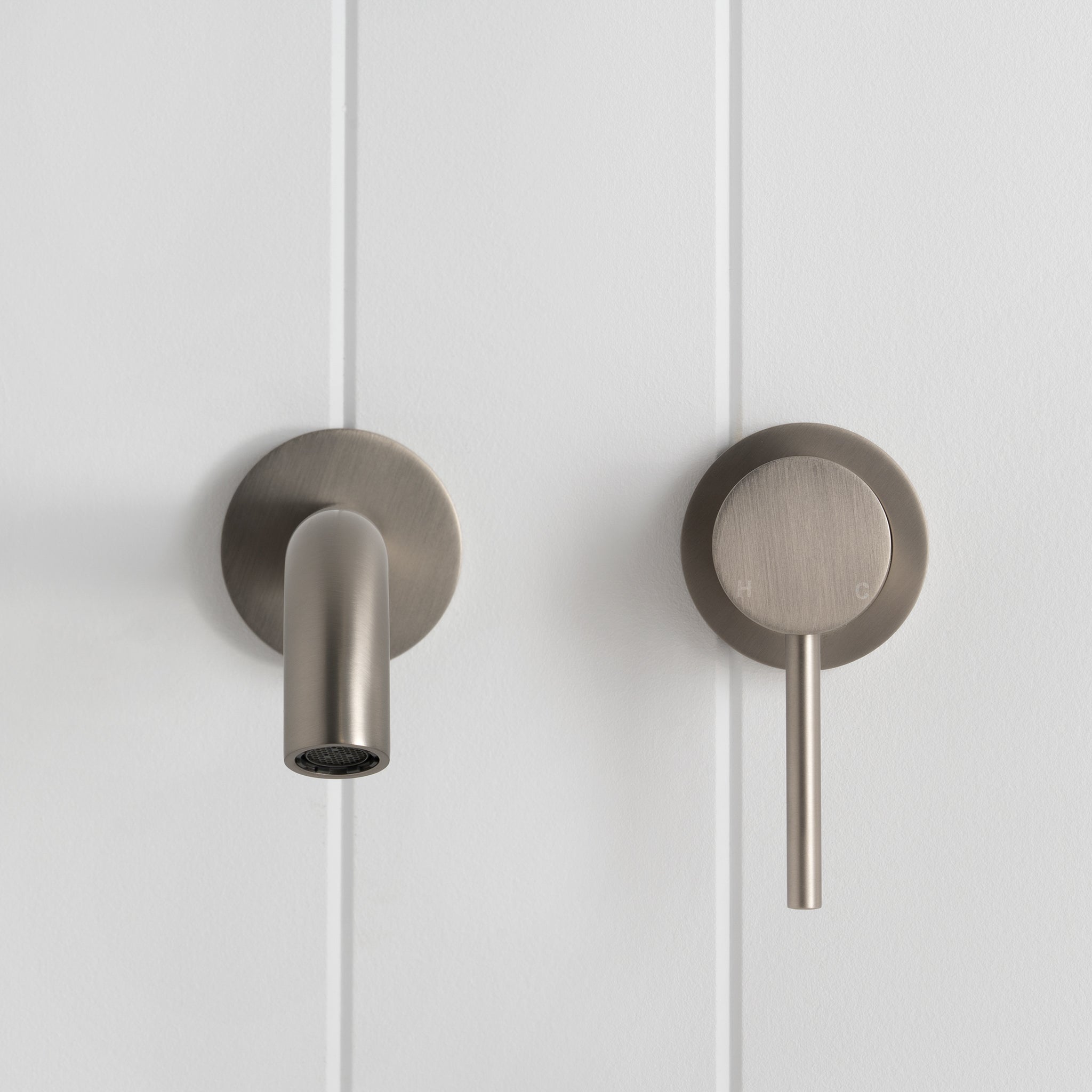
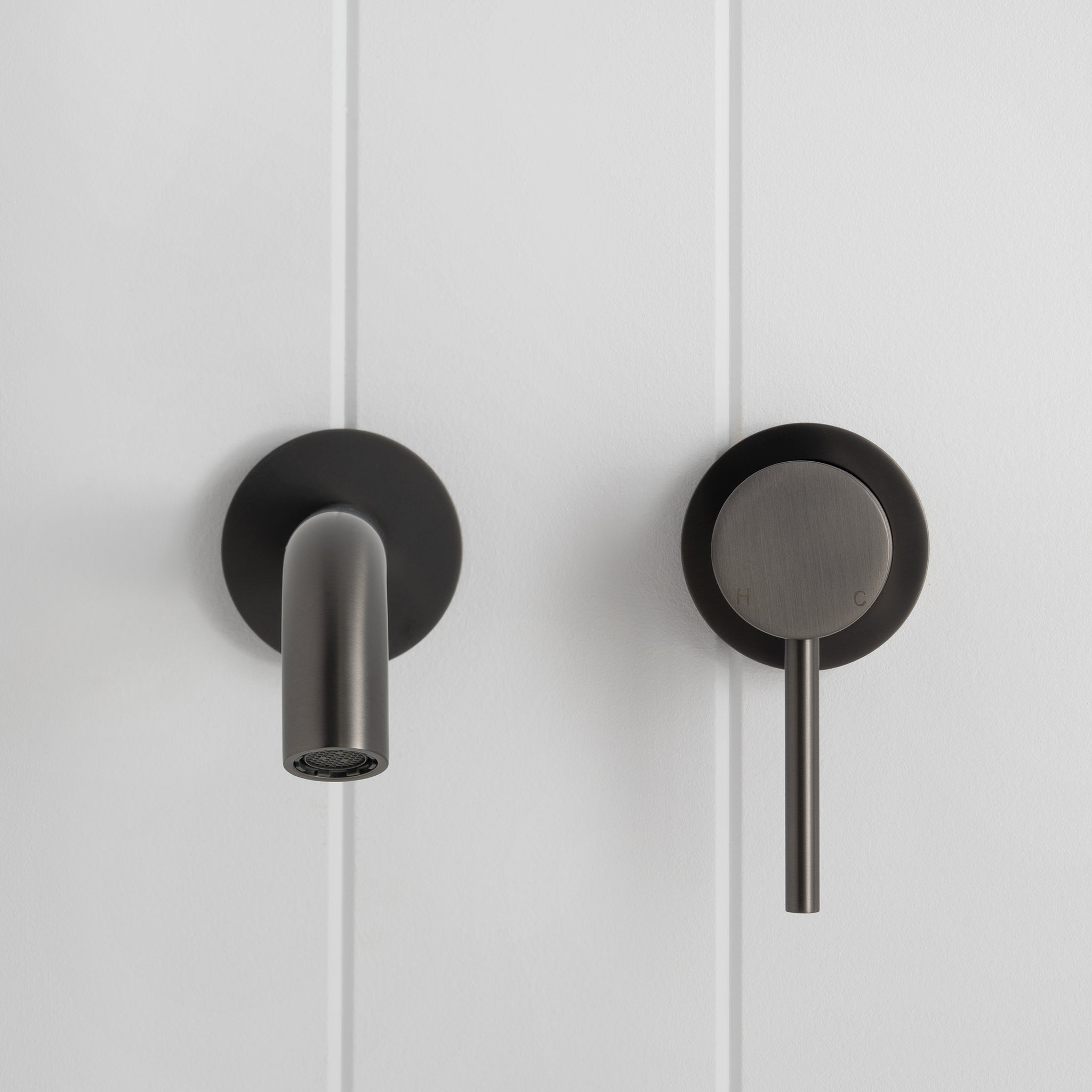
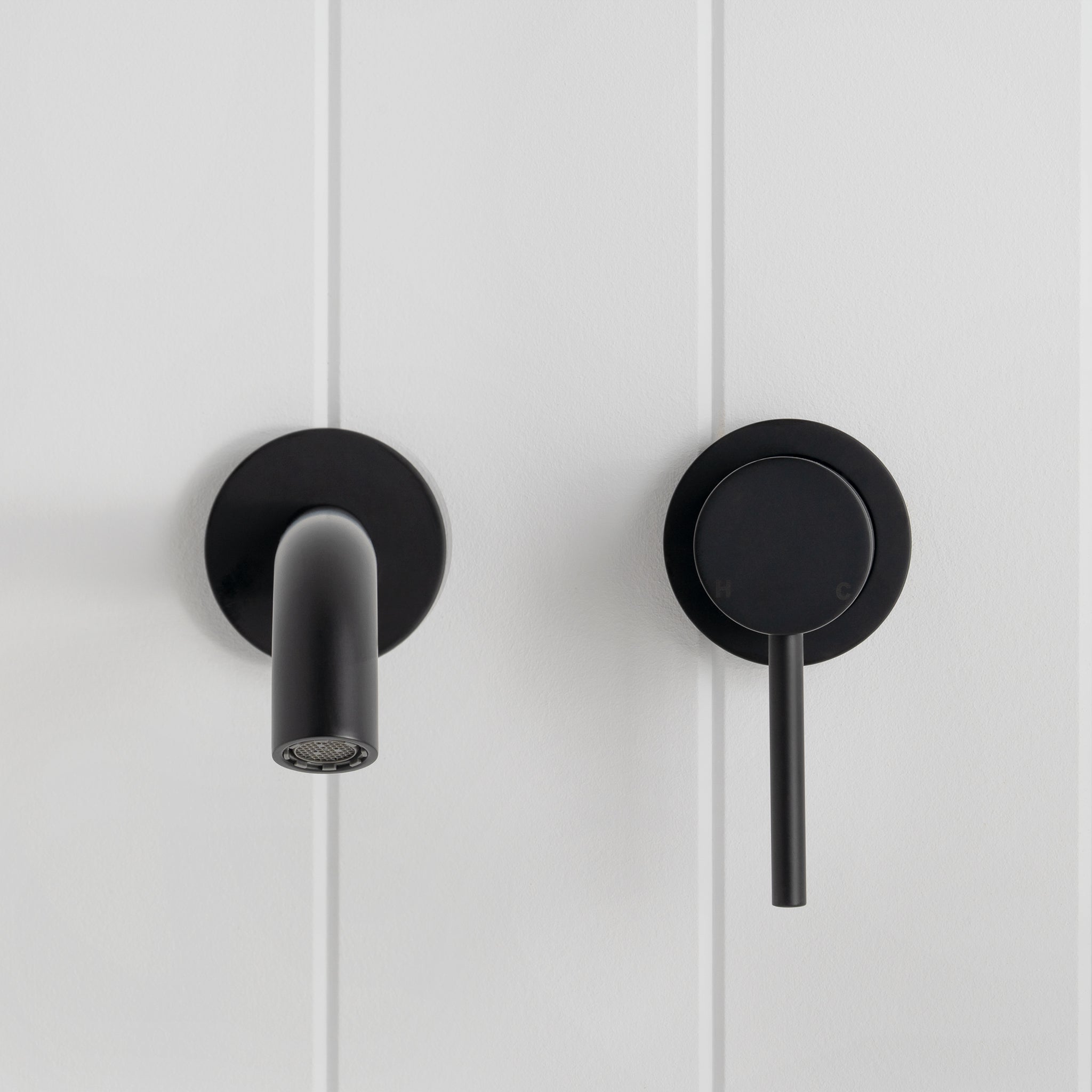
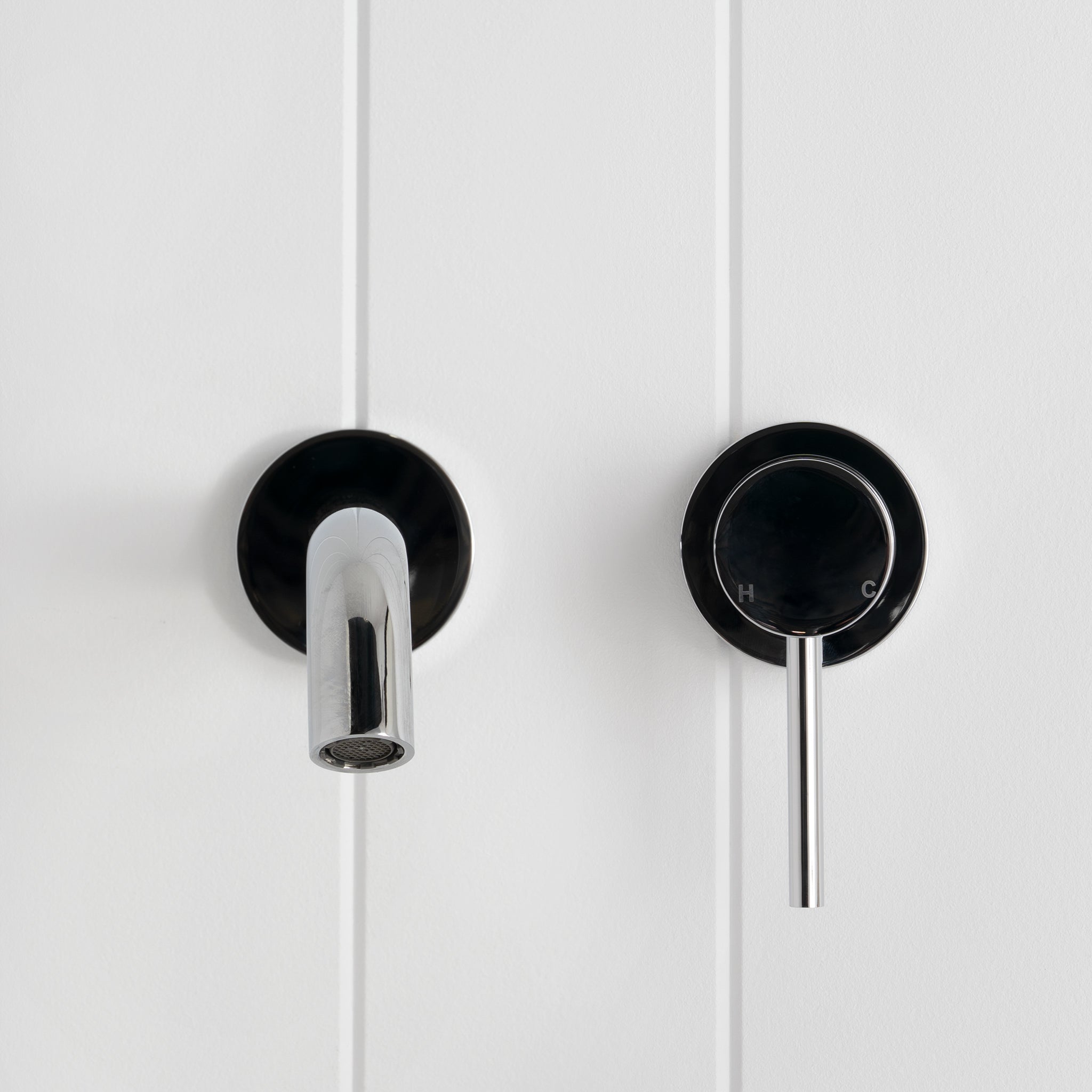
Brushed Nickel is one of the most versatile finishes in modern design, offering a soft, neutral tone that suits almost any palette. Chrome remains a classic, timeless option, particularly effective in lighter, brighter modern schemes. Matte Black delivers strong definition and works especially well against white or light grey palettes, though it benefits from being balanced with warmth elsewhere in the room. Brushed Brass introduces warmth into an otherwise cool material palette, suiting modern bathrooms that lean slightly toward Contemporary or Organic Modern. Gunmetal offers sophisticated contrast for darker, design-led modern bathrooms, particularly against lighter stone or tile.
Each finish works best when chosen to complement the room's broader palette rather than in isolation, and this decision is worth making early, since it influences the mirror, hardware and lighting choices that follow — see our Bathroom Tapware Buying Guide for full product options and our Bathroom Tapware Finishes Explained guide for a deeper look at how each finish performs over time.
Modern Lighting Principles
Layered lighting is one of the defining features of a well-executed modern bathroom, combining several light sources rather than relying on a single overhead fitting. LED mirrors provide even, shadow-free task lighting directly where it's needed most. Ambient lighting fills the room with soft, general illumination, while task lighting focuses specifically on the vanity and grooming zone. Accent lighting — a niche light, a feature pendant — adds depth and visual interest without overwhelming the room's restrained palette.
For a full breakdown of layering ambient, task and accent light correctly, see our Bathroom Lighting Guide; and for guidance on choosing between frontlit and backlit LED mirror illumination, see our Frontlit vs Backlit LED Mirrors guide. Getting this layering right early in the planning process avoids the common problem of retrofitting additional lighting once tiling and joinery are already complete.

Styling a Modern Bathroom
Modern styling favours open space over dense furnishing, giving the room's clean lines room to breathe. Minimal accessories — a single soap dispenser, one considered tray — keep surfaces uncluttered without feeling bare. A carefully placed plant introduces organic contrast against the room's straight lines and neutral palette. Towels should be chosen in tones that support the palette rather than introduce a new colour, and folded or rolled neatly rather than left loose. Niches provide storage without visual interruption, keeping everyday items out of sight while remaining easily accessible. Throughout, favouring texture over decoration — a fluted panel, a honed stone surface — creates far more lasting visual interest than ornamental detailing ever could.
Designer Insight: texture creates more visual interest than excessive colour. A honed stone benchtop or fluted cabinetry panel gives the eye something genuinely interesting to rest on, without introducing a single additional colour to the room.
Common Modern Bathroom Mistakes
- Too much black: an entirely black palette can feel heavy and cold rather than sophisticated, particularly in a room without generous natural light.
- Cold colour palettes without warmth: an all-grey scheme with no warm material can feel clinical rather than calm, however well-detailed the rest of the room might be.
- Oversized feature walls: a statement tile used across too large an area can overwhelm a restrained room instead of adding the intended focal point.
- Too many finishes: combining several metal tones or materials undermines the simplicity modern design depends on, no matter how attractive each individual choice is.
- Poor lighting: a single overhead downlight rarely does justice to a well-designed modern bathroom, leaving the vanity zone poorly lit for everyday grooming tasks.
- Ignoring storage: an open, minimal look quickly becomes cluttered without a proper plan for everyday items, undermining the very simplicity it was meant to achieve.
Expert Designer Recommendations
Designer's Rules
- Choose fewer, better materials rather than layering in several competing finishes.
- Balance cool palettes with at least one warm material or finish.
- Plan lighting in layers from the outset, not as an afterthought.
- Let proportion and restraint do the work that decoration would in other styles.
Comparison Tables
Material → Pros & Cons
| Material | Pros | Cons |
|---|---|---|
| Large-format porcelain | Minimal grout lines, low maintenance | Requires skilled installation |
| Microcement | Seamless finish, unique texture | Needs specialist application |
| Natural stone | Authentic texture and variation | Requires regular sealing |
| Engineered stone | Consistent look, low maintenance | Less unique variation than natural stone |
| Timber-look joinery | Adds warmth, moisture-resistant | Can read as generic if overused |
Colour Palette → Best Tapware Finish
| Colour Palette | Best Tapware Finish |
|---|---|
| White and oak | Brushed Nickel or Chrome |
| Greige and brushed nickel | Brushed Nickel |
| Soft grey and matte black | Matte Black |
| Travertine and brushed brass | Brushed Brass |
| Charcoal and gunmetal | Gunmetal |
Mirror Shape → Best Application
| Mirror Shape | Best Application |
|---|---|
| Frameless rectangular | Strict modern, minimalist bathrooms |
| Arched | Modern bathrooms wanting a single soft contrast |
| Rounded rectangle | Transitional modern bathrooms |
| Full-length | Larger modern bathrooms and ensuites |
Bathroom Size → Modern Design Recommendations
| Bathroom Size | Modern Design Recommendation |
|---|---|
| Small bathroom | Light palette, large mirror, mirror cabinet storage |
| Family bathroom | Durable engineered surfaces, ample niche storage |
| Ensuite | Full-length mirror, layered lighting, statement tapware |
| Powder room | Bolder palette, single striking mirror |
Lighting Strategy → Bathroom Type
| Lighting Strategy | Bathroom Type |
|---|---|
| LED mirror plus ambient downlights | Small to mid-size bathrooms |
| Full three-layer lighting | Family bathrooms and ensuites |
| Accent lighting emphasis | Luxury and statement bathrooms |
Frequently Asked Questions
What makes a bathroom look modern?
Clean lines, a neutral palette, quality materials and layered lighting all combine to create the restrained, considered look modern design is known for. It's the consistency across all of these elements, rather than any single feature, that ultimately makes a bathroom read as genuinely modern.
Are modern bathrooms timeless?
Yes, when built around genuine principles like proportion and material quality rather than short-lived trend colours or finishes. Bathrooms that lean too heavily on a single fashionable colour or finish tend to date faster than those built on these more enduring fundamentals.
What colours suit a modern bathroom?
Neutral palettes such as white and oak, greige and brushed nickel, or soft grey and matte black all suit modern design particularly well. The right choice usually comes down to how much warmth or contrast the rest of the home already carries.
What mirror shape works best?
Frameless rectangular mirrors suit the strictest modern interpretation, while arched or rounded-rectangle shapes work well for a slightly softer take on the style without moving away from its core principles.
Which tapware finish is most timeless?
Chrome and Brushed Nickel are generally considered the most enduring choices, though Matte Black and Gunmetal remain strong options for a bolder modern look that still ages well with proper care.
How do I make a small bathroom feel modern?
Favour a light palette, a large mirror to increase perceived space, and a mirror cabinet to keep everyday items hidden from view, since visual clutter shrinks a small room far more than its actual footprint does.
Designer's Cheat Sheet
Designer's Cheat Sheet
- ✔ Want a strict, minimalist look? → Frameless rectangular mirror, Chrome or Brushed Nickel
- ✔ Want warmth in a modern scheme? → Travertine and Brushed Brass
- ✔ Want a bolder statement? → Charcoal and Gunmetal
- ✔ Small bathroom? → Light palette, large mirror, mirror cabinet storage
- ✔ Unsure where to start? → Choose tapware finish first, then build the palette around it
Conclusion
Truly modern bathrooms combine simplicity, thoughtful planning and quality materials rather than relying on short-term trends. Texture creates more lasting visual interest than excessive colour, and the most timeless modern bathrooms rely on proportion rather than decoration. Getting the mirror, lighting, tapware and materials working together as one considered whole results in a bathroom that remains beautiful and genuinely practical for years to come, rather than one that needs revisiting the moment its defining trend moves on.
Ready to bring your modern bathroom to life? Explore our complete Smart Mirrors, Mirror Cabinets and Bathroom Tapware collections, or browse our Best Sellers if you're not sure where to start.
Where To Next?
- Start here: Bathroom Design Styles Explained: Find the Perfect Style for Your Home
- Related guides: The Ultimate Bathroom Mirror Buying Guide (2026 Edition), Bathroom Vanity Buying Guide, Bathroom Lighting Guide, Bathroom Tapware Buying Guide, How to Plan the Perfect Bathroom Layout, Bathroom Renovation Mistakes: 21 Costly Mistakes to Avoid Before You Build and Bathroom Storage Ideas: 23 Smart Ways to Create a More Organised Bathroom
- Explore: the full Smart Mirrors range
- Need storage: the full Mirror Cabinets range
- Browse: the full Bathroom Tapware range
- Not sure where to start: our Best Sellers


