


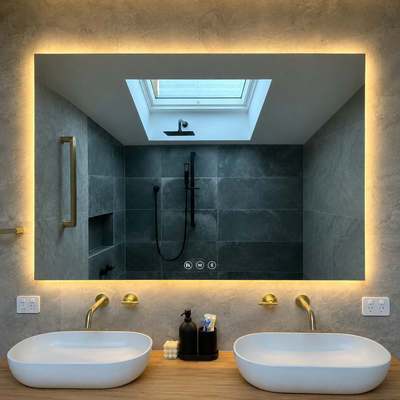
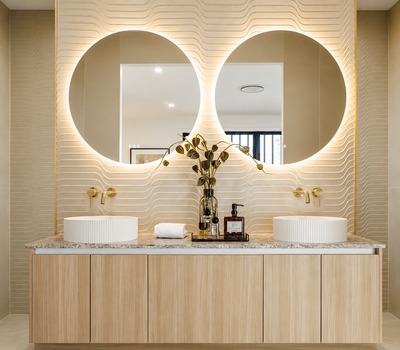
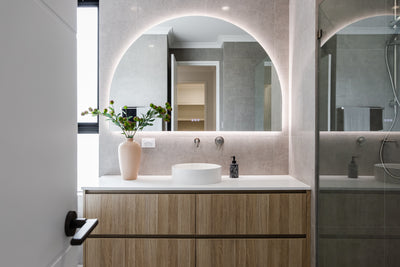
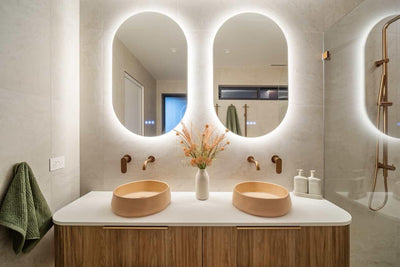
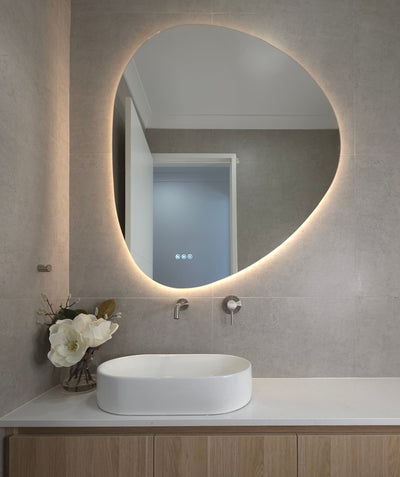
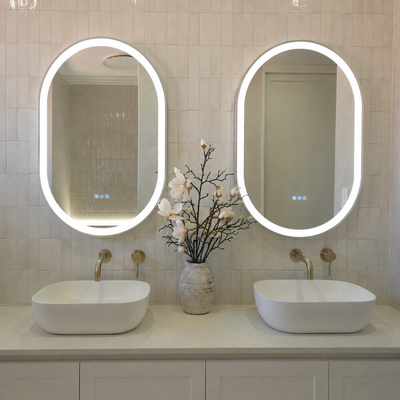
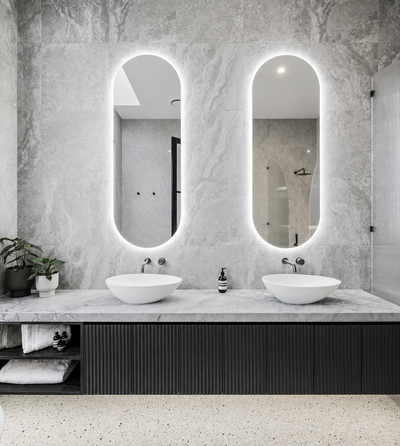



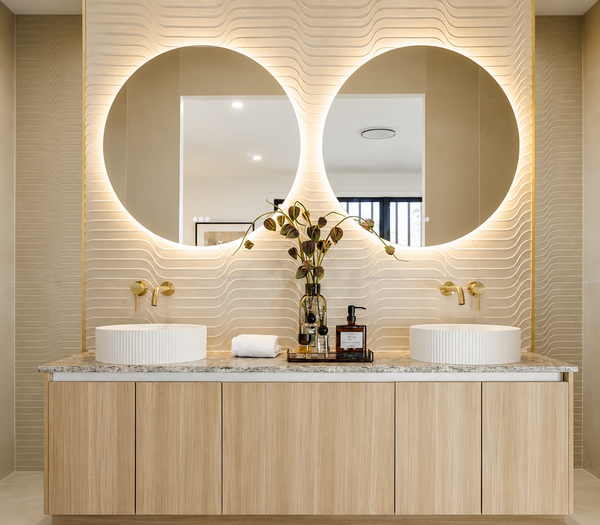

Most bathroom renovation regret has very little to do with product quality. It comes from decisions made — or skipped — during planning: a mirror chosen before the lighting plan, a power point left out for an LED mirror, storage forgotten until the wall's already tiled. The products themselves are rarely the problem. The order and thinking behind the decisions almost always are.
This guide walks through 21 of the most common and costly bathroom renovation mistakes, why they happen, and how to avoid each one before construction begins.
Why Trust InVogue Mirrors & Bathware? InVogue is an Australian retailer trusted in over 20,000 homes, specialising in LED bathroom mirrors and mirror cabinets. This guide draws on the planning issues that come up most often in real Australian renovations, not just product features.
Quick Answer
- Plan lighting and power before choosing finishes — retrofitting either afterward is expensive and often impossible.
- Choose mirror size, shape and height deliberately, not as a last-minute decision.
- Don't forget storage — a mirror cabinet solves clutter a decorative mirror never will.
- Prioritise function before style — the best-looking bathrooms still need to work every day.
- Slow down on the big decisions — rushed choices are the single most common source of renovation regret.
The 21 Costly Mistakes
Mistake 1: Choosing the Wrong Mirror Size
This usually happens when a mirror is chosen by eye rather than measured against the vanity. An undersized mirror makes a vanity look incomplete and reflects less light back into the room. Measure the vanity width first and size the mirror to it — see our Mirror Size Guide for exact proportions.
Designer Insight: undersized mirrors are the single most common sizing regret in Australian bathroom renovations.
Mistake 2: Installing the Mirror Too High or Too Low
Mirror height is often set by trade habit rather than the household's actual sightlines, leaving tall or short household members straining to see themselves properly. Height should be based on the tallest regular user's eye line, not a generic industry default. See our Mirror Height Guide for exact placement guidance. For tap, shower and accessory heights on the same wall, see bathroom heights and rough-in measurements.
Designer Insight: installation height affects daily usability more than the mirror itself ever will.
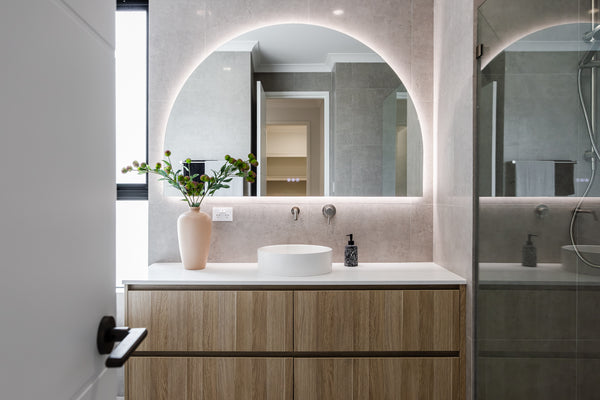
Mistake 3: Ignoring Lighting Until the End
Lighting is frequently treated as a finishing touch rather than a planning decision, which means the electrical rough-in is often locked in before the mirror or lighting style is chosen. This forces compromises later that proper sequencing would have avoided. Plan lighting layers alongside layout and electrical work, not after. See our Bathroom Lighting Guide for the full planning approach.
Designer Insight: lighting decided last is one of the most common reasons a finished bathroom feels underwhelming.
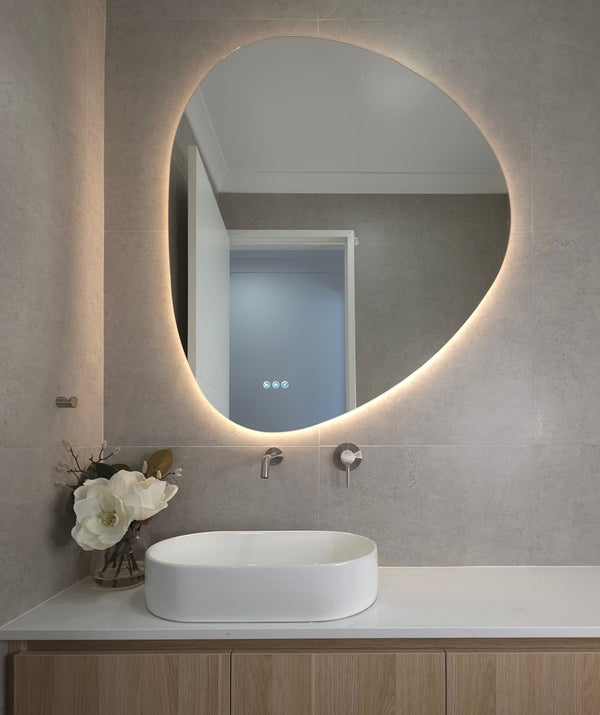
Mistake 4: Choosing the Wrong Mirror Shape
Shape is often chosen from a photo rather than for how it suits the room's actual proportions and existing lines. A shape that clashes with the vanity or wall proportions rarely looks intentional, however attractive it seemed in isolation. Match the mirror's shape to the room's existing geometry — see our Mirror Shape Guide for the full breakdown.
Designer Insight: shape should follow the room's proportions, not the other way around.
Mistake 5: Not Planning Power for LED Mirrors
This happens when a decorative mirror is assumed to be interchangeable with an LED mirror, without accounting for the hardwired power connection LED mirrors require. Discovering this after tiling means costly rework. Confirm mirror type early and involve a licensed electrician during the rough-in stage, not after.
Designer Insight: power planning is invisible when done correctly and expensive to fix when it isn't.
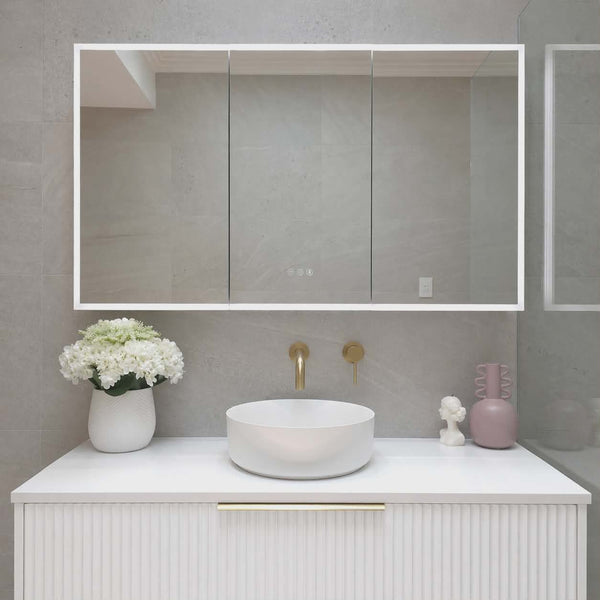
Mistake 6: Forgetting Storage
Storage is often deprioritised in favour of a decorative mirror, leaving nowhere for everyday toiletries once the room is finished. This typically results in cluttered benchtops that undermine an otherwise considered design. A mirror cabinet solves both needs in a single fixture — see our Mirror Cabinet or Bathroom Mirror? guide.
Designer Insight: storage reduces visual clutter more effectively than any amount of styling.

Mistake 7: Choosing Style Before Function
Style tends to get decided first because it's the most visually exciting part of a renovation, while function is assumed to follow naturally. It often doesn't — a beautiful mirror in the wrong position or without adequate lighting fails at its basic job. Settle function — size, height, lighting, storage — before finalising the look.
Designer Insight: function creates luxury; a beautiful fixture that doesn't work well rarely feels luxurious for long.
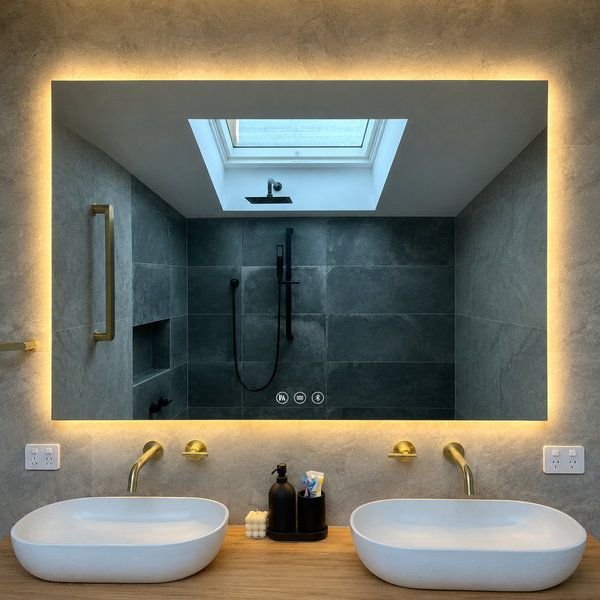
Mistake 8: Poor Double Vanity Planning
Double vanity mirrors are often chosen without considering symmetry, spacing or whether one large mirror would suit the wall better than two. Mismatched spacing or mismatched mirrors read as an error rather than a style choice. Decide early whether one large mirror or a symmetrical pair suits the wall — see our Double Vanity Mirror Guide.
Designer Insight: on a double vanity, consistency matters more than the mirrors chosen individually.

Mistake 9: Using One Ceiling Downlight
A single ceiling downlight is often assumed to be sufficient because it lights the room adequately at a glance, but it leaves faces in shadow at the mirror where lighting matters most. This undermines everyday tasks like shaving and makeup application. Add dedicated mirror task lighting alongside ambient ceiling light — see our Bathroom Lighting Guide.
Designer Insight: a room can be adequately lit and still poorly lit for the tasks that matter most.
Mistake 10: Choosing Poor Colour Temperature
Colour temperature is often an afterthought, or left at whatever default the electrician installs, rather than a deliberate choice matched to the room's purpose. Cool white light in a relaxation-focused ensuite, or overly warm light in a functional family bathroom, both undercut the room's intended feel. Choose colour temperature deliberately, or opt for an adjustable LED mirror — see our LED Mirror Features Explained guide.
Designer Insight: the wrong colour temperature can undo an otherwise well-planned bathroom.
Mistake 11: Buying the Cheapest Mirror
Price is often the deciding factor when budgets are tight late in a renovation, but the cheapest mirror is rarely the best long-term value. Lower-quality LEDs, glass and demister components tend to fail earlier, leading to a second purchase and a second installation cost. Weigh total value — glass quality, LED lifespan, warranty — rather than sticker price alone.
Designer Insight: a mirror that needs replacing in three years was never actually the cheaper option.
Mistake 12: Ignoring Bathroom Proportions
Mirrors are frequently chosen at a standard size without accounting for the specific room's proportions, ceiling height or wall width. A mirror that's the right size for a display photo can look wrong entirely in a narrower or shorter room. Measure the actual space and select accordingly, rather than matching a generic size.
Designer Insight: proportion, not trend, is what makes a mirror look like it belongs in the room.
Mistake 13: Not Considering Cleaning and Maintenance
Finishes and mirror styles are often chosen purely for appearance, without considering how easy they'll be to keep clean day to day. Heavily detailed frames and hard-to-reach corners can become a genuine daily frustration. Favour simpler profiles and easy-clean glass coatings where hygiene and upkeep matter most.
Designer Insight: a bathroom that's easy to maintain tends to stay looking considered for far longer than one that isn't.
Mistake 14: Forgetting Demisters
Demisters are often treated as an optional extra rather than a practical necessity, particularly in bathrooms without strong ventilation. Without one, a mirror fogs up immediately after a hot shower, making it unusable exactly when it's needed most. In humid Australian bathrooms, a built-in demister pad is one of the most practically useful features available.
Designer Insight: a fogged mirror after every shower is a daily frustration that a demister solves completely.

Mistake 15: Choosing Trendy Over Timeless
Trend-driven choices are often made because they photograph well at the time of renovation, without considering how they'll read in five or ten years. A heavily trend-led mirror can date a bathroom faster than any other single fixture. Favour proportion and material quality over whatever look is currently trending.
Designer Insight: the best renovations are usually the simplest — restraint ages better than a bold trend-driven choice.
Mistake 16: Ignoring Natural Light
Natural light is often overlooked entirely when planning artificial lighting and mirror placement, even though it significantly affects how the finished room will feel. A mirror positioned to reflect a window can dramatically brighten a room at no extra cost. Consider window position and orientation before finalising the lighting and mirror plan.
Designer Insight: reflecting natural light is one of the few genuinely free upgrades available in a renovation.
Mistake 17: Overcrowding Small Bathrooms
Small bathrooms are often filled with multiple smaller fixtures in an attempt to maximise function, which frequently backfires by making the room feel busier and smaller. A single, well-proportioned mirror usually outperforms several competing elements. See our Best Bathroom Mirrors for Small Bathrooms guide for size and shape guidance suited to compact rooms.
Designer Insight: in a small bathroom, one confident choice almost always beats several smaller ones.

Mistake 18: Poor Ventilation Planning
Ventilation is often undersized or positioned poorly relative to the shower, allowing moisture to linger throughout the room long after use. Persistent humidity can affect mirror demisting performance, cabinetry joinery and finish longevity over time. Plan exhaust capacity and position around the shower and mirror wall specifically, not just the room generally.
Designer Insight: good ventilation protects every other decision in the room, including the mirror itself.
Mistake 19: Mixing Too Many Finishes
Finishes are often selected individually rather than as a coordinated set, resulting in a mirror frame, tapware and hardware that don't quite match. Inconsistent metals read as an oversight rather than an intentional eclectic choice. Choose mirror frame finish to align with tapware and hardware from the outset.
Designer Insight: consistency across finishes does more for a bathroom's perceived quality than any single expensive piece.
Mistake 20: Not Planning for Future Needs
Renovations are often planned around current household needs alone, without considering accessibility, family growth or how long the household intends to stay in the home. A fixed mirror height or a cabinet without adjustable shelving can limit flexibility later. Consider long-term usability — adjustable elements, accessible heights — where the budget allows.
Designer Insight: a small amount of future-proofing during planning is far cheaper than retrofitting later.
Mistake 21: Rushing Decisions
Big decisions are often rushed toward the end of a renovation timeline, when trade schedules create pressure to finalise choices quickly. Rushed decisions are the single most common thread running through renovation regret, regardless of which specific mistake resulted. Build extra time into the schedule for the decisions that are hardest to change later — mirror size, height, lighting and power.
Designer Insight: thoughtful planning almost always produces a better outcome than a fast decision made under pressure.
Renovation Planning Timeline
A well-sequenced renovation avoids most of the mistakes above by design. Inspiration gathering comes first, establishing the overall style direction. Budget is set next, informing every decision that follows. Layout planning determines the position of the vanity, shower and mirror wall. Plumbing and electrical rough-in follow, and this is the stage where mirror power, lighting circuits and ventilation must already be decided. Mirror selection — size, shape, style and lighting type — happens before installation, not during it. Lighting is finalised alongside the mirror, not as an afterthought. Installation follows, and finally final styling — accessories, towels, finishing touches — completes the room. For the full stage-by-stage sequence, and what each trade needs decided before they arrive, see our bathroom renovation order of trades.

Expert Designer Recommendations
Designer's Rules
- Decide mirror size, shape and lighting before the electrical rough-in, not after.
- Prioritise function first — style built on solid function tends to last.
- Don't let a tight schedule force a rushed decision on anything hard to change later.
- When in doubt, choose the simpler, more consistent option over the more elaborate one.
Comparison Tables
Mistake → Better Approach
| Mistake | Better Approach |
|---|---|
| Wrong mirror size | Size to vanity width |
| No power planned | Confirm mirror type before rough-in |
| Lighting left until the end | Plan lighting with layout and electrical |
| No storage | Choose a mirror cabinet |
| Rushed decisions | Build extra planning time into the schedule |
Planning Stage → Decisions to Make
| Planning Stage | Decisions to Make |
|---|---|
| Layout | Vanity, shower and mirror wall position |
| Electrical | Mirror power, lighting circuits, ventilation |
| Mirror selection | Size, shape, lighting style, finish |
| Final styling | Accessories, towels, finishing details |
Bathroom Size → Key Considerations
| Bathroom Size | Key Considerations |
|---|---|
| Small / powder room | One confident mirror, avoid overcrowding |
| Standard ensuite | Balance function, storage and style |
| Large / double vanity | Symmetry and consistent lighting across mirrors |
Mirror Type → Best Application
| Mirror Type | Best Application |
|---|---|
| Decorative mirror | No power required, simplest installation |
| LED mirror | Task lighting, requires hardwired power |
| Mirror cabinet | Storage-constrained bathrooms |
Lighting Choice → Best Use
| Lighting Choice | Best Use |
|---|---|
| Frontlit | Precise everyday grooming tasks |
| Backlit | Ambience, relaxation-focused bathrooms |
| Adjustable colour temperature | Households wanting flexibility across the day |
Frequently Asked Questions
What is the biggest bathroom renovation mistake?
Rushing decisions under schedule pressure is the single most common thread behind renovation regret — it's the root cause behind many of the other mistakes on this list.
When should I choose my mirror?
Before the electrical rough-in. Mirror type, size and lighting style all affect what power and wiring the room needs. Our order of trades guide shows where that decision sits.
Should lighting be planned first?
Lighting should be planned alongside layout and electrical work, not left until the end — retrofitting lighting after tiling is expensive and often impossible.
Do I need power behind an LED mirror?
Yes, in most cases. LED mirrors are typically hardwired rather than plug-in, so power needs to be confirmed with a licensed electrician during the rough-in stage.
Should I choose a mirror cabinet?
If the bathroom lacks dedicated storage elsewhere, a mirror cabinet is usually worth the small additional cost, since it solves both the mirror and storage needs in one fixture.
How do I future-proof my bathroom?
Consider accessibility, adjustable elements and long-term household needs during planning — small allowances made now are far cheaper than retrofitting later.
Designer's Cheat Sheet
Designer's Cheat Sheet
- ✔ Before choosing a mirror → confirm size, shape and power needs
- ✔ Before tiling → finalise lighting and electrical rough-in
- ✔ Tight on storage? → Choose a mirror cabinet
- ✔ Feeling rushed? → Build more time into the decisions that are hardest to change
- ✔ Unsure? → Choose the simpler, more consistent option
Conclusion
The best bathroom renovations aren't necessarily the most expensive ones — they're the ones where every decision, from mirror size to power planning, supports how the room will actually be used every day. Avoiding the 21 mistakes above comes down to a handful of habits: plan lighting and power early, choose mirror size and shape deliberately, don't forget storage, and give the biggest decisions the time they deserve rather than rushing them at the end.
Ready to start planning with confidence? Explore our complete Smart Mirrors and Mirror Cabinets collections, or browse our Best Sellers if you're not sure where to start.
Where To Next?
- Start here: The Ultimate Bathroom Mirror Buying Guide (2026 Edition)
- Related guides: Bathroom Lighting Guide, Bathroom Mirror Ideas: 25 Designer-Approved Ideas for Every Bathroom Style, How to Choose the Right Mirror Size for Your Vanity, How High Should You Hang a Bathroom Mirror?, Round vs Arch vs Rectangle Bathroom Mirrors, Double Vanity Mirror Guide, Best Bathroom Mirrors for Small Bathrooms, Mirror Cabinet or Bathroom Mirror? and LED Mirror Features Explained
- Browse: the full Smart Mirrors range
- Need storage: the full Mirror Cabinets range
- Not sure where to start: our Best Sellers

