


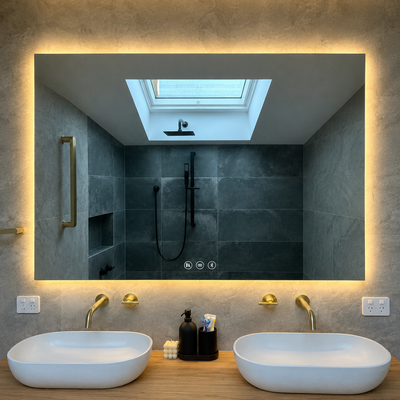
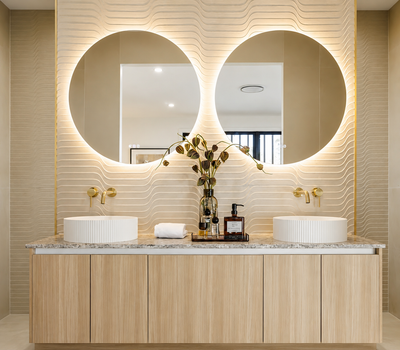
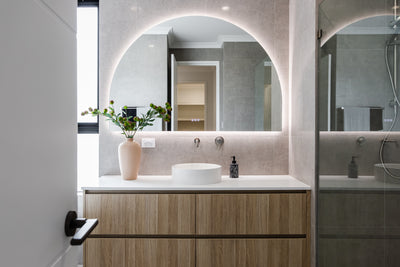
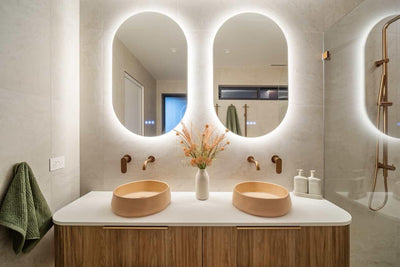




Buying a bathroom mirror isn't simply choosing one that looks nice in a photo. There are at least eight real decisions involved — mirror type, size, shape, lighting, features, installation, style and budget — and getting even one of them wrong is enough to make an otherwise beautiful mirror feel like the wrong choice once it's actually on the wall.
This guide walks through every one of those decisions in order, in the same depth and detail as the rest of our Knowledge Centre, with links to the dedicated guide on each topic wherever you want to go deeper.
Why Trust InVogue Mirrors & Bathware? InVogue is an Australian retailer trusted in over 20,000 homes, specialising in LED bathroom mirrors and mirror cabinets. The recommendations in this guide come from bathroom design principles — proportion, balance and light — rather than passing trends.
Quick Answer
- 1. Mirror or cabinet: decide based on storage, not style alone.
- 2. Size: measure the vanity, not the wall.
- 3. Shape: match your bathroom's existing lines and style.
- 4. Lighting: frontlit for task, backlit for ambience.
- 5. Features: prioritise demister, CCT and dimming first.
- 6. Installation: plan height and power before the mirror arrives.
- 7. Style: let the room's existing design language guide the choice.
- 8. Quality: check LED lifespan, glass and warranty over price alone.
Bathroom Mirror Buying Process
A snapshot of the whole journey — each step is covered in detail below.

Step 1 — Mirror or Mirror Cabinet?
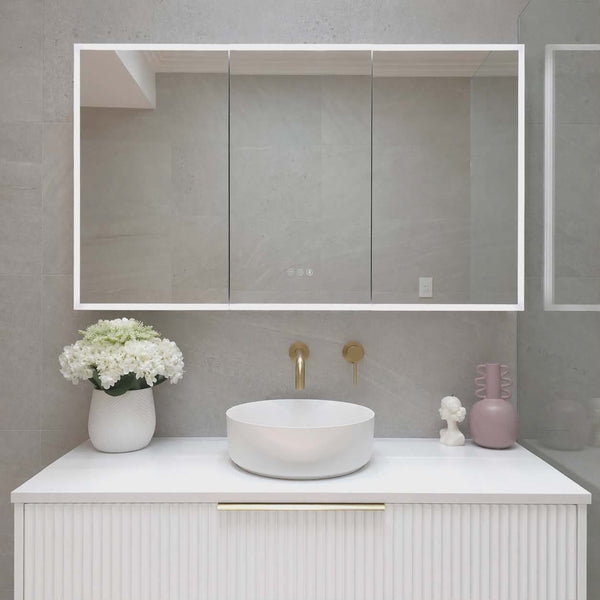
The first decision is storage, not style: if your vanity already has enough, a decorative mirror gives you the most freedom of shape and finish; if it doesn't, a mirror cabinet solves storage and reflection in one fixture without using extra floor space. This choice should come before shape or lighting, since it changes which products you're actually comparing. For the full reasoning, see our companion guide, Mirror Cabinet or Bathroom Mirror?
Step 2 — Choosing the Right Size
Size starts with your vanity's benchtop width, not the wall. We generally recommend the largest size that's no wider than your vanity. When in doubt, size up, if the space allows it; if a side wall, tiles or the door make it tight, go one size down. Round and shaped mirrors often look right a little narrower. Leave 100–200mm of clearance above the top of the tap or splashback (never less than 100mm). For the complete sizing method by vanity width, see our companion guide, How to Choose the Right Mirror Size for Your Vanity.
Designer Insight: homeowners almost always wish they'd bought a slightly larger mirror, and almost never wish they'd bought a smaller one. When you're deciding between two sizes, the larger option is the safer bet.
Step 3 — Choosing the Right Shape
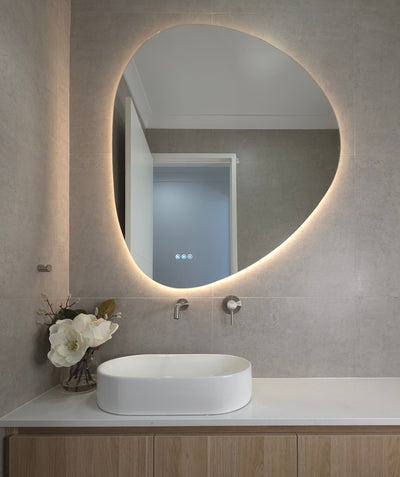
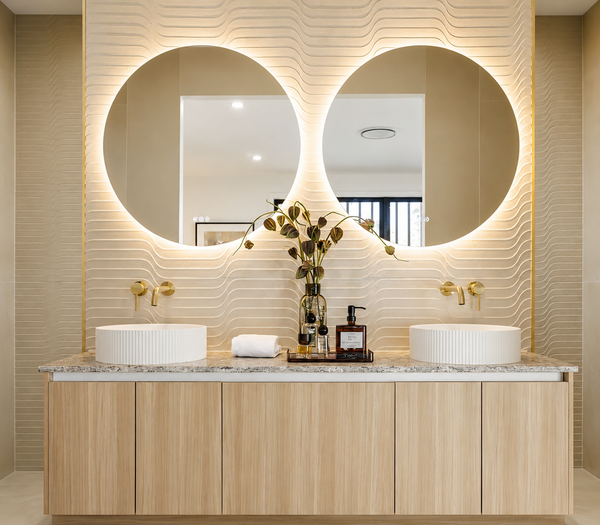
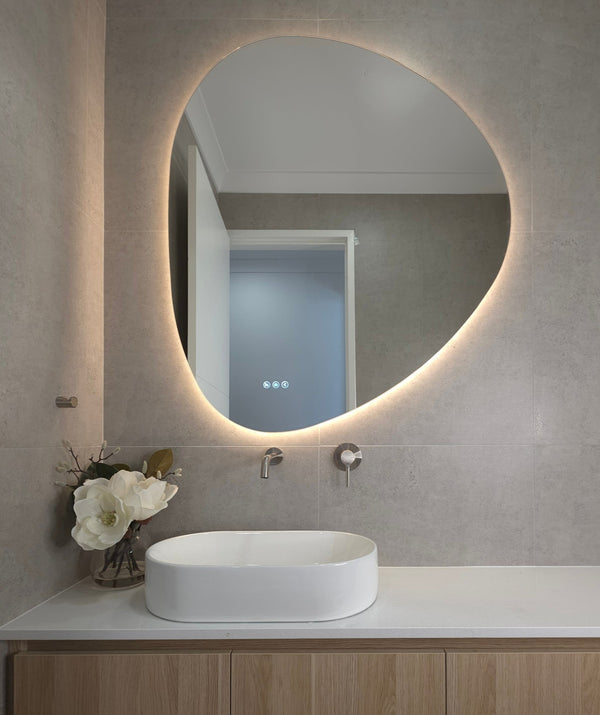
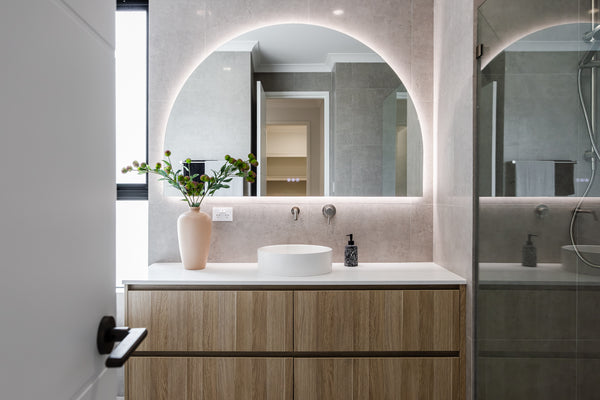
Shape sets the tone before the mirror reflects anything: round softens a room of hard lines, arch balances curve with structure, rectangle is the most flexible and forgiving choice, and organic shapes work best as a single statement piece. For the full breakdown by style, vanity width and ceiling height, see our companion guide, Round vs Arch vs Rectangle Bathroom Mirrors: Which Shape Is Right?

Step 4 — Choosing Lighting
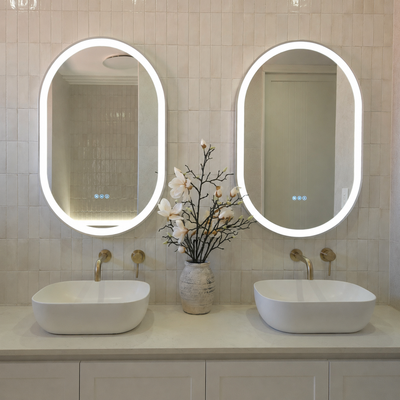
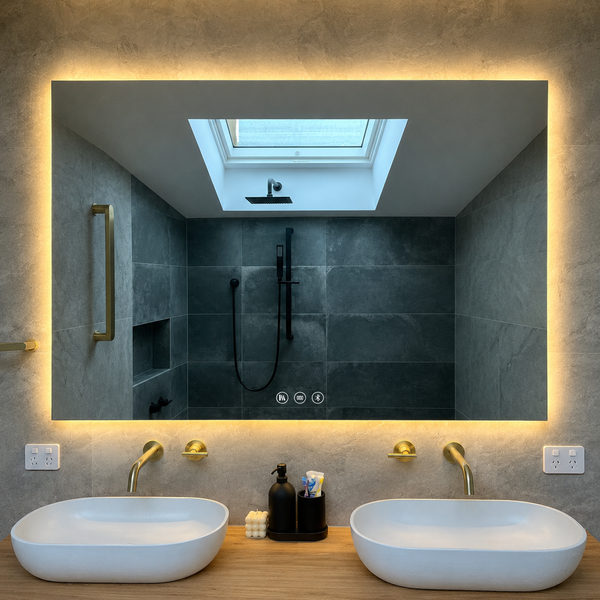
Frontlit lighting gives the clear, even light that shaving, makeup and skincare genuinely need; backlit lighting gives a softer, more architectural glow better suited to ambience than close-up tasks. Many premium mirrors now offer a version of both, letting one mirror do both jobs. For the full comparison, see our companion guide, Frontlit vs Backlit LED Bathroom Mirrors: Which Lighting Style Is Best?
Step 5 — Understanding Features
A demister, adjustable colour temperature and dimming do the most daily work of any smart mirror feature; Bluetooth, memory function and CRI add real value once those fundamentals are covered. Features are used every single day, so they deserve the same attention as shape and size. For a full explanation of every major feature, see our companion guide, LED Mirror Features Explained.
Designer Insight: lighting affects how luxurious a bathroom feels more than expensive tiles do. A beautifully tiled bathroom lit poorly still feels unfinished, while considered lighting can make a modest bathroom feel genuinely premium.
Step 6 — Installation
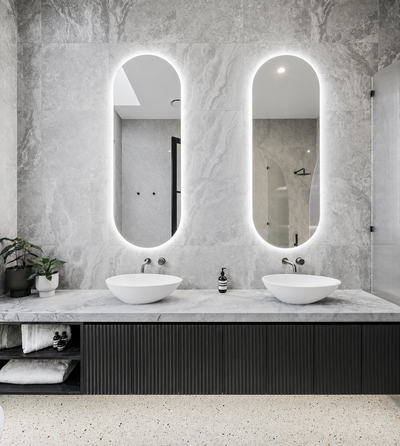
Centre the mirror roughly at eye level for the main user, leave 100–200mm of clearance above the top of the tap or splashback (never less than 100mm), and confirm your electrician has a power point correctly positioned before the mirror is fixed to the wall — not after. Our guide to whether LED mirrors need an electrician explains where the cable goes. On a double vanity, keep the height identical across the whole run so the wall reads as one considered composition rather than two separate installations. For the complete height and placement method, see our companion guide, How High Should You Hang a Bathroom Mirror?

Step 7 — Matching Bathroom Style
The right mirror should belong to the room's overall design language, not just its measurements. Style is the fastest way to make a mirror feel chosen rather than simply available — the same shape and lighting decisions above should be filtered through whatever look the rest of the bathroom is already working toward.
| Bathroom Style | Recommended Mirror |
|---|---|
| Modern | Rectangle, frameless, backlit |
| Hamptons | Arch or framed rectangle, frontlit |
| Contemporary | Rectangle or arch, backlit |
| Organic Modern | Organic or round, backlit |
| Scandinavian | Round or rectangle, backlit |
| Luxury | Arch (statement size), backlit, high CRI |
| Family bathroom | Rectangle, frontlit or combined |
| Apartment | Round or compact rectangle, cabinet for storage |
Step 8 — Choosing Quality
Not every LED mirror is built the same, and this is the step where price and value most often diverge. Copper-free glass resists the corrosion that eventually causes the black spotting seen on cheaper mirrors in humid Australian bathrooms. A genuine LED lifespan rating — around 50,000 hours on well-built mirrors — typically outlasts the bathroom it's installed in. A meaningful warranty and responsive local support matter more than they seem to at the point of sale, since a mirror is one of the more difficult bathroom fixtures to replace later. It's also worth asking about the mirror's IP rating, which indicates how well it's sealed against moisture — a genuinely bathroom-rated mirror should carry a rating suited to its position near water, not one borrowed from a fitting designed for a dry room.
Designer Insight: investing in quality pays off over ten years, not ten months. A well-built mirror with genuine components is usually the cheaper option once you compare it against replacing two or three lower-quality mirrors over the same period.
Smart Mirrors vs Standard Mirrors
| Aspect | Standard Mirror | Smart LED Mirror |
|---|---|---|
| Lighting | Relies on separate room fixtures | Built-in, adjustable lighting |
| Everyday comfort | Fixed, no adjustment | Demister, dimming, memory function |
| Longevity | Depends on glass quality alone | Copper-free glass plus rated LED lifespan |
| Typical cost | Lower upfront | Higher upfront, lower cost over time |

Bathroom Renovation Checklist
Save this before you order — it condenses all eight steps above into a five-minute check you can run through before committing to a final choice.
- ✓ Decide mirror or mirror cabinet based on storage needs
- ✓ Measure vanity width and tapware height
- ✓ Choose a shape that suits the room's style and ceiling height
- ✓ Decide between frontlit, backlit or combined lighting
- ✓ Shortlist the features that match your daily routine
- ✓ Confirm mirror height and power point position with your electrician
- ✓ Check LED lifespan, glass quality, IP rating and warranty
- ✓ Confirm the final choice suits the room, not just the showroom
Common Buying Mistakes
- Buying too small: the single most common regret — a slightly larger mirror almost always looks more considered.
- Ignoring lighting: choosing a mirror purely for its shape, then discovering the light doesn't suit daily use.
- Choosing appearance only: a beautiful mirror that doesn't suit the vanity, ceiling height or routine still feels like the wrong choice.
- Ignoring installation: not planning mirror height or power point position before the mirror arrives.
- Ignoring features: treating demister, CCT and dimming as extras rather than daily-use essentials.
- Buying low-quality LEDs: a short-rated LED array can dim or discolour years before a quality one would.

Expert Designer Recommendations
Designer's Rules
- Decide storage before style — it changes whether you're shopping for a mirror or a cabinet.
- When in doubt on size, choose the larger option.
- Prioritise demister, adjustable colour temperature and dimming before Bluetooth or extras.
- Check LED lifespan and warranty before comparing price — they're the real measure of value.
Quick Comparison Tables
Mirror Type
| Type | Best For |
|---|---|
| Decorative mirror | Vanities with existing storage |
| Mirror cabinet | Small bathrooms, or vanities needing more storage |
Mirror Shape
| Shape | Best For |
|---|---|
| Round | Powder rooms, ensuites, small bathrooms |
| Arch | Ensuites, premium and transitional bathrooms |
| Rectangle | Family bathrooms, double vanities |
| Organic / Irregular | Statement powder rooms, eclectic interiors |
Lighting
| Style | Best For |
|---|---|
| Frontlit | Task lighting — shaving, makeup, skincare |
| Backlit | Ambience — luxury and evening use |
Features
| Feature | Priority Level |
|---|---|
| Demister, CCT, dimming | Essential |
| Bluetooth, memory, CRI | Valuable, once essentials are covered |
Bathroom Style
See the full style table in Step 7 above.
Buying Priorities
| If Your Priority Is… | Focus On |
|---|---|
| Getting the basics right | Size and installation height |
| Everyday usability | Lighting and features |
| Long-term value | Quality, glass and warranty |
| Visual impact | Shape and bathroom style match |
Frequently Asked Questions
What size mirror should I buy?
We generally recommend the largest size that's no wider than your vanity. When in doubt, size up, if the space allows it; if a side wall, tiles or the door make it tight, go one size down. Round and shaped mirrors often look right a little narrower. See our Mirror Size Guide for the complete breakdown.
Are LED mirrors worth it?
Yes, for most bathrooms — built-in lighting, a demister and adjustable colour temperature solve real daily problems that a standard mirror can't.
How long do LED mirrors last?
A genuine LED array rated for around 50,000 hours will typically outlast the bathroom it's installed in, provided the rest of the mirror is well built.
Should I buy a cabinet?
If your vanity is short on storage, yes. If it already has enough, a decorative mirror gives you more freedom of shape and finish.
What lighting is best?
Frontlit for task-focused use, backlit for ambience, or a combined mirror if you want both in one fixture.
How much should I spend?
Enough to get genuine LED lifespan, copper-free glass and a meaningful warranty — the cheapest option in this category is rarely the best long-term value. Think of the purchase price against ten years of daily use, not against the mirror sitting next to it on the shelf.
Can I install a bathroom mirror myself?
A decorative mirror can often be mounted without an electrician if it's not hardwired; any mirror requiring a power connection should be installed by a licensed electrician. Confirming this before you order, rather than after delivery, avoids a mirror sitting boxed up while trades are arranged. If you're swapping out an old builder's mirror, see replacing a builder's mirror with an LED mirror.
Designer's Cheat Sheet
Designer's Cheat Sheet
- ✔ Not sure where to start? → Decide mirror or cabinet first
- ✔ Between two sizes? → Choose the larger one
- ✔ Want daily comfort? → Demister, CCT and dimming
- ✔ Want ambience? → Backlit, dimmed low
- ✔ Want long-term value? → Check LED lifespan, glass and warranty
Conclusion
The best bathroom mirror isn't necessarily the most expensive one — it's the one that genuinely suits your bathroom, your daily routine and your long-term needs. Get the mirror-or-cabinet decision right, size and shape it to the room, choose lighting and features that match how you actually use the space, and install it at the right height with genuine components behind it. Every other decision becomes easier once those fundamentals are in place.
Ready to put this guide into practice? Explore our complete Smart Mirrors and Mirror Cabinets collections to compare real options across every shape, size and lighting style covered here.
Where To Next?
- Browse the full Shop All Mirrors range
- Explore our Smart Mirrors
- Need storage: the full Mirror Cabinets range
- Not sure where to start: our Best Sellers

