




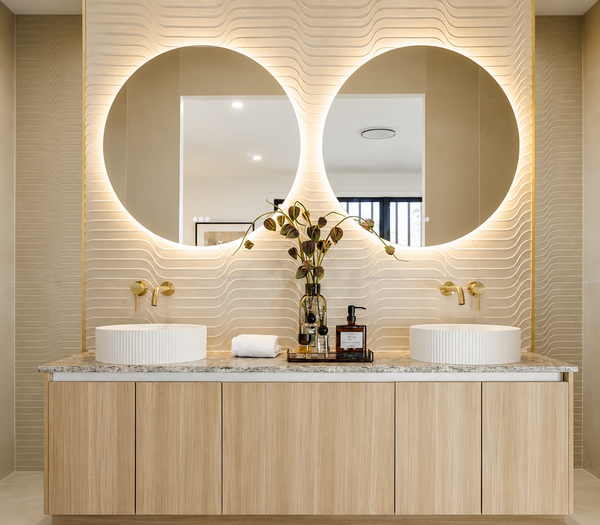
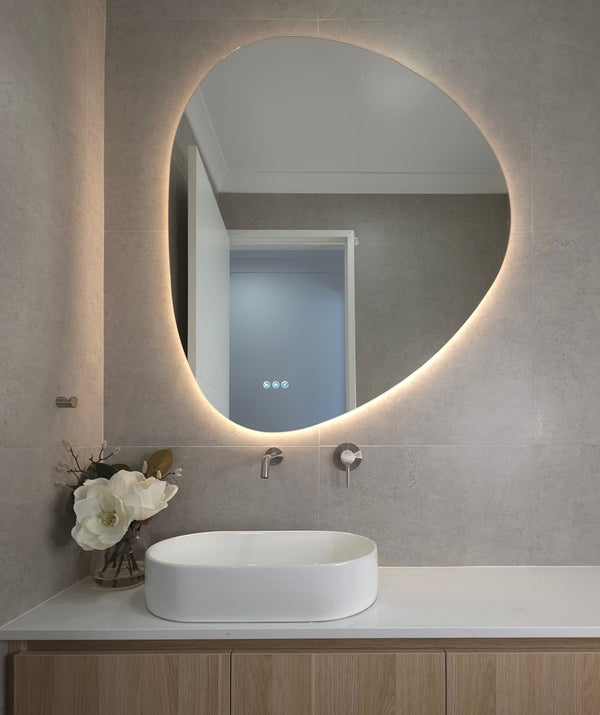
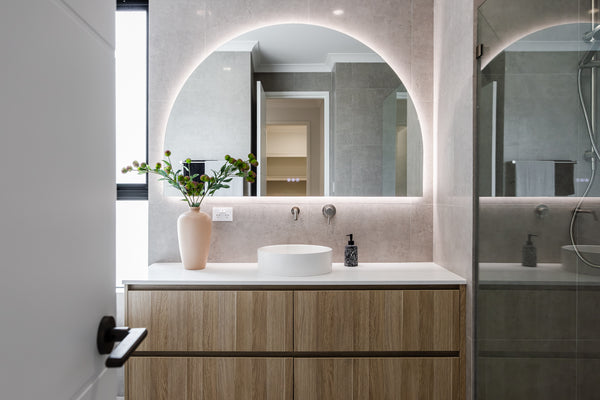
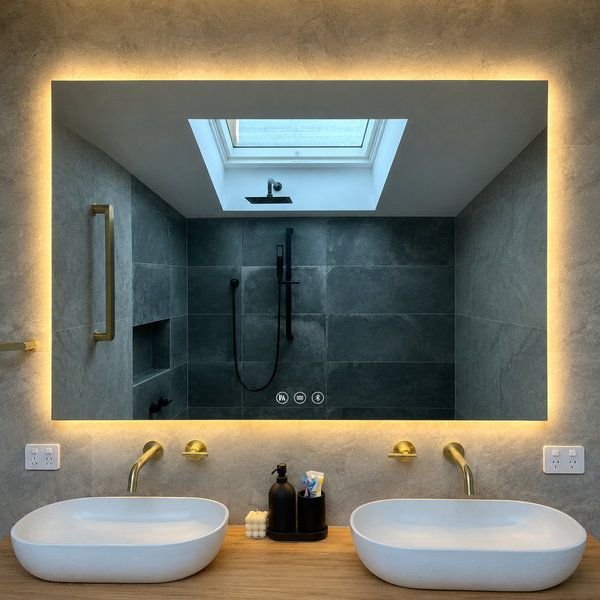
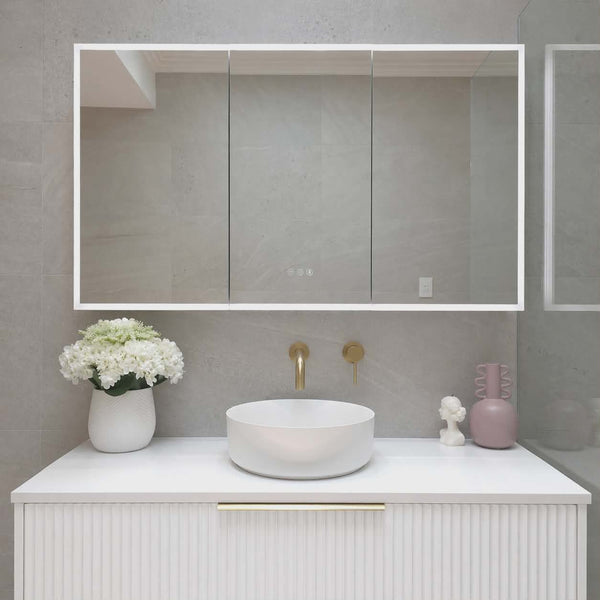

Brushed brass, matte black and gunmetal taps cost more than chrome, and they show it when they're cleaned the wrong way. The usual culprit isn't age or water. It's a bathroom spray, a limescale remover or a scourer that strips or scratches the surface, and once that happens, most warranties (ours included) won't cover it.
The good news is that the right routine is short. Every finish we sell, from Antique Brass to Chrome, is cleaned the same way: warm soapy water, a soft cloth, and a dry wipe. This guide sets out exactly what our factory's care instructions allow and rule out, how to deal with water spots and limescale without acid, and what the 3-year finish warranty does and doesn't cover.
11 min read · Last reviewed 13 October 2026 · Written by Ella James
Why Trust InVogue Mirrors & Bathware? InVogue is an Australian retailer trusted in over 20,000 homes, specialising in LED bathroom mirrors, mirror cabinets and tapware across every major finish. The guidance in this article reflects genuine design and maintenance considerations, not finish trends.
Quick Answer
- Clean every finish the same way: warm soapy water and a soft cloth, then dry it. That's the whole routine.
- Never use acids, chlorine or caustic soda. Our factory care instructions rule out hydrochloric, formic and acetic acid (vinegar), chlorine and caustic soda.
- Nothing abrasive: no scouring powders, cream cleansers, scourers or brushes.
- Acid or abrasive cleaners void the warranty. Our tapware finish is covered for 3 years, on the condition it's cleaned with mild soapy water and a soft cloth.
- Water spots: prevent them by drying the tap after use. There's no safe acid shortcut.
In this guide

What Wears a Tapware Finish
Four things, and age isn't really one of them.
- Chemistry. Acids dissolve limescale, which is why they're in bathroom descalers. They also attack a coloured finish. Chlorine bleach and caustic soda do the same. These are the chemicals our factory names in its care instructions.
- Abrasion. Scourers, powders and cream cleansers polish the surface away a little at a time. On a brushed finish you'll see shiny patches; on matte black, glossy rub marks.
- Hard water. Minerals dry on the surface as white spots and, left alone, as crusty scale. They don't damage the finish themselves; the harsh product used to remove them does.
- Salt air. Our warranty asks that tapware is used indoors, in a home, and away from salt-air exposure. If you're building near the beach, dry the taps more often and keep windows in mind.
One more that people don't expect: drain cleaner. Concentrated caustic soda is on the factory's banned list, and pouring it into a basin can splash the waste and the tap base. Keep it well away, or have a plumber clear the drain.
Care by Finish
The rules don't change from finish to finish. What changes is what each one shows first, and that decides how often you'll want to wipe it.


Do and don't are the same for every finish because they come from one set of factory care instructions. Tips reflect what each finish shows first.
| Finish | Do | Don't | Tips |
|---|---|---|---|
| Antique Brass | Warm soapy water, soft cloth, dry off | Brass polish, vinegar, descalers, scourers | It's a deep, aged tone by design. Don't try to polish it bright: brass polishes are abrasive and will take the colour with them. |
| Brushed Brass | Warm soapy water, soft cloth, dry off | Acid or chlorine cleaners, scourers, cream cleansers | The brushed texture hides fingerprints and light spotting well. Rubbing hard in one spot leaves a shiny patch that breaks the brushed look. |
| Brushed Nickel | Warm soapy water, soft cloth, dry off | Acid or chlorine cleaners, scourers, powders | One of the most forgiving finishes for marks. A weekly wash and an occasional dry wipe is plenty. |
| Brushed Gunmetal | Warm soapy water, soft cloth, dry off | Acid or chlorine cleaners, scourers, powders | White mineral spots show up against the dark colour. Drying after use is the best habit to build. |
| Matte Black | Warm soapy water, soft cloth, dry off | Acid or chlorine cleaners, scourers, melamine sponges | Fingerprints and water spots show more than on brushed finishes. Never scrub a mark: abrasion turns matte to gloss and can't be undone. |
| Chrome | Warm soapy water, soft cloth, dry off | Acid or chlorine cleaners, scourers, powders | Water spots show most on high-polish chrome. A dry microfibre cloth after use keeps it bright without any product. |
Designer Insight: if a finish is the reason you chose the tap, put a microfibre cloth on a hook beside the basin. The single best thing for any coloured tap is drying it after use, and nobody does it if the cloth lives in a drawer.
Cleaners That Damage Tapware Finishes
If the label says descaler, limescale, rust remover, mould remover or bleach, keep it off the tap. Our warranty page puts it simply: clean with mild soapy water and a soft cloth, with no abrasive or chemical cleaners.
| Product type | Safe on our tapware? | Why |
|---|---|---|
| Dishwashing liquid in warm water | Yes | This is the mild soapy water the care instructions ask for. |
| Soft cloth or microfibre | Yes | Soft fabric cloths are the only cloths the factory instructions allow. |
| White vinegar | No | Vinegar is acetic acid, one of the acids the factory care instructions rule out. |
| Limescale, calcium and rust removers (CLR-type products) | No | They work because they're acidic. Acid cleansers void the warranty. |
| Bleach and mould sprays | No | Most contain chlorine, which the care instructions rule out. |
| Nappy soakers and oxygen bleaches | No | They're chemical cleaners, which our warranty excludes. Keep them in the laundry. |
| Drain cleaner | No | Concentrated caustic soda is on the factory's banned list. |
| Multi-purpose bathroom sprays | Check the label | If it lists an acid, bleach or "descales", don't use it on the tap. If in doubt, use soapy water. |
| Cream cleansers and scouring powders | No | Abrasive cleansers void the warranty and dull every finish. |
| Scourers, steel wool, stiff brushes, melamine sponges | No | Abrasive cloths and brushes scratch and polish the surface. |
Watch the splash, too. Spraying a shower screen or tiles with a descaler often lands on the mixer below. Wipe the tap with clean water straight after, or cover it while you clean.

Limescale and Water Spots Without Damage
There's no acid shortcut on a coloured tap, so the method is about prevention and patience. White spots are dried minerals. If you dry the tap after use they never build up, and that matters most in hard-water areas.
How to clean a brushed or matte tap without damaging the finish
- Wet a soft cloth in warm, soapy water and wipe the whole tap, including the base and lever.
- Hold the warm cloth over any spotted area for a minute to soften the deposit, then wipe again. Repeat rather than rub harder.
- Rinse with a cloth dampened in clean water so no soap film dries on the surface.
- Dry it completely with a dry, soft cloth.
If scale has built up over months and won't shift, stop there. Scraping, scrubbing or reaching for a descaler is how finishes get damaged and claims get refused. Send us a photo and we'll tell you what we'd do.

Cleaning the Aerator
If the flow gets weak or uneven, check the outlet first. Our factory instructions say exactly that: when the flow drops, check the spout is clean. Usually it's debris or scale in the aerator, the small mesh insert at the tip of the spout. Our leaking tap and weak flow guide covers the jug test and what to check next.
You'll see advice online to soak aerators in vinegar. On a coloured tap we don't recommend it. The aerator's outer ring is often finished to match the tap, and vinegar is one of the acids the care instructions rule out. Never soak or bag the spout itself. If the aerator unscrews by hand, wrap it in a soft cloth first so you don't mark it, rinse the mesh under running water, and refit it. If it needs a key or won't move, leave it to your plumber. A badly scaled aerator is better replaced than attacked, and aerators are covered by our warranty against defects for 7 years.
Can You Paint or Touch Up Tapware?
Not in a way that lasts. Spray paints and touch-up pens sit on top of the original finish, and a tap is handled wet every day. In a Bunnings Workshop thread on spray-painting chrome taps a brushed copper colour, the moderator's view was that metallic sprays are decorative and likely to rub or peel with use. That matches what we'd expect.
Painting also ends the finish warranty, because the surface is no longer the original one. If a finish has failed, contact us with photos while it's within 3 years. If you simply want a different colour, change the tap. On our wall mixers the in-wall body is the same across all six finishes for a given model, so the part inside the wall isn't what stops a change of finish. Ask us about the parts before you plan it. Our wall-mounted vs basin mixer guide explains how the body and trim fit together.
Matching Finishes Across Pieces
Buy the pieces that sit side by side in the same finish name and, where you can, at the same time. Our mixers and basin wastes come in the same six finishes, so a Vienna Short basin mixer and a Lisbon pop-up waste can both be ordered in, say, Brushed Brass.
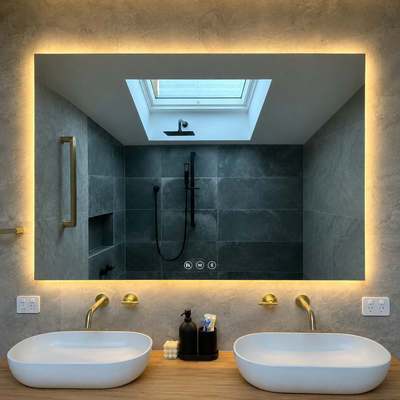
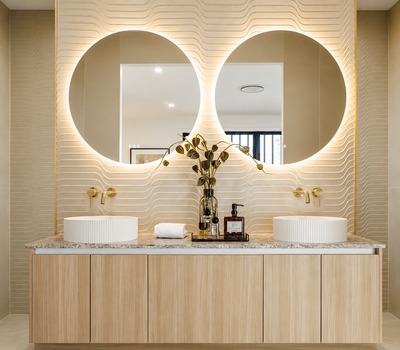
Light matters more than people think. A warm LED mirror makes brass richer and gunmetal closer to charcoal; a cool setting pushes gunmetal towards blue-grey. Look at your samples under the bathroom's own lighting before you decide. Our tapware finishes guide compares each one.

What the 3-Year Finish Warranty Covers
Our tapware warranty covers defects in materials and workmanship from the date of purchase. Each part has its own term:
From our warranty page, read 13 October 2026.
| Part | Years | What it means |
|---|---|---|
| Tap body | 15 | The body of the tap |
| Cartridges, valves & aerators | 7 | The parts that control and shape the water |
| Surface finish | 3 | The coloured or polished surface |
| Washers & O-rings | 2 | The seals |
It's a parts warranty. If a part is faulty, we send you the replacement part at no cost; installation labour isn't included. Cover applies to the original purchaser, in the original installation, for home use. To keep it valid, the tap must be installed by a licensed plumber, cleaned with mild soapy water and a soft cloth with no abrasive or chemical cleaners, and used indoors, in a home, away from salt-air exposure. Misuse, damage during installation, normal wear and tear, and consequential loss aren't covered.
To claim, email us with your order number, a few photos and a short description; we reply within 2 business days. The full terms are on our warranty page, and they sit alongside your rights under the Australian Consumer Law.
Common Mistakes
- Using the shower descaler on the taps. It's acidic. It also drifts onto the mixer when you spray the screen.
- Vinegar "because it's natural". It's acetic acid, and it's on our factory's list.
- Scrubbing a water spot. On matte black the mark goes and a shiny patch takes its place.
- Polishing antique brass. Brass polish removes the aged colour you paid for.
- Leaving taps wet in hard-water areas. Spots become scale, and scale tempts people into the wrong products.
- Bagging the spout in vinegar to clear the aerator. The whole outlet sits in acid. Rinse the aerator on its own, or replace it.
Frequently Asked Questions
How do you clean brushed brass tapware?
Wipe it with a soft cloth wrung out in warm, soapy water, rinse with a cloth dampened in clean water, then dry it. Don't use vinegar, limescale removers, bleach, scourers or cream cleansers. For spots, hold the warm soapy cloth on them for a minute and repeat rather than rubbing harder.
How do you clean matte black taps without leaving marks?
Use warm soapy water and a soft microfibre cloth, then dry the tap completely so no water spots form. Never scrub a mark or use a melamine sponge: abrasion polishes matte black to a gloss you can't reverse. Acid and chlorine cleaners are ruled out by our care instructions too.
Can I use vinegar on my taps?
Not on our tapware. Vinegar is acetic acid, and acetic acid is one of the chemicals our factory care instructions say can cause considerable damage. Acid cleansers also void the finish warranty. For water spots, dry the tap after use and soften stubborn spots with a warm soapy cloth.
Does brushed brass tarnish?
We don't make claims about how our finishes age beyond the warranty: the surface finish is covered for 3 years against defects. In owner reviews across the industry, damaged brass finishes are most often blamed on cleaning products. Clean with mild soapy water, dry it, keep acids and abrasives away, and avoid salt-air exposure.
Will the warranty cover a finish damaged by a cleaning product?
No. Our warranty requires tapware to be cleaned with mild soapy water and a soft cloth, with no abrasive or chemical cleaners, and the factory instructions say acid or abrasive cleansers void the warranty. A genuine defect in the finish within 3 years is covered as a parts warranty.
How do I clean a tap aerator without damaging the finish?
If the aerator unscrews by hand, wrap it in a soft cloth, remove it, rinse the mesh under running water and refit it. Don't soak it or the spout in vinegar. If it needs a tool or is heavily scaled, ask your plumber or replace it; aerators are covered for 7 years against defects.
Can you paint tapware a different colour?
You can, but it won't last on a tap that's handled wet every day, and it ends the finish warranty. Metallic sprays are decorative and tend to rub or peel. Changing the tap is the lasting fix. On our wall mixers, the in-wall body is shared across all six finishes of a model.
Designer's Cheat Sheet
Designer's Cheat Sheet
- ✔ Every finish → warm soapy water, soft cloth, dry off
- ✔ Never → vinegar, descalers, bleach, caustic soda, drain cleaner
- ✔ Never → scourers, powders, cream cleansers, stiff brushes, melamine sponges
- ✔ Water spots → dry after use; soften with a warm soapy cloth, don't scrub
- ✔ Weak flow → check the aerator; rinse it, don't soak it in acid
- ✔ Finish warranty → 3 years, parts only, mild soapy water and a soft cloth
Conclusion
None of our finishes is fragile. They just have less tolerance for the bathroom cleaning cupboard than most people expect. Keep one cloth and a squeeze of dishwashing liquid for the taps, dry them when you can, and leave every descaler for the tiles. If something does go wrong in the first 3 years, photos and an email are all a claim takes.
Where To Next?
- Choosing a finish: Bathroom Tapware Finishes Explained
- Start here: the Bathroom Tapware Buying Guide
- Wall or bench: Wall-Mounted vs Basin Mixers
- In the kitchen: How to Choose a Kitchen Mixer
- Shop by finish: Antique Brass, Brushed Brass, Brushed Nickel, Brushed Gunmetal, Matte Black and Chrome, or the full tapware range
Need help? Ask us with a photo. Send us a photo of your tap and the mark through our contact page, or call 1300 221 495, and we'll tell you what we'd do.

