


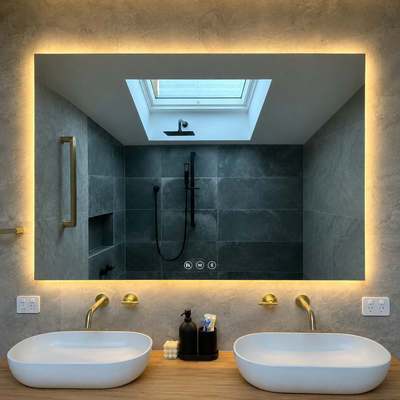
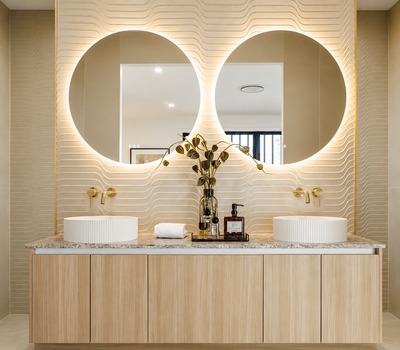
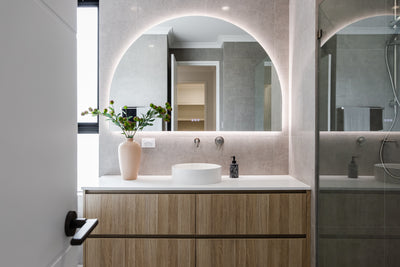
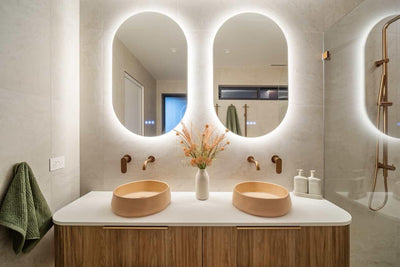
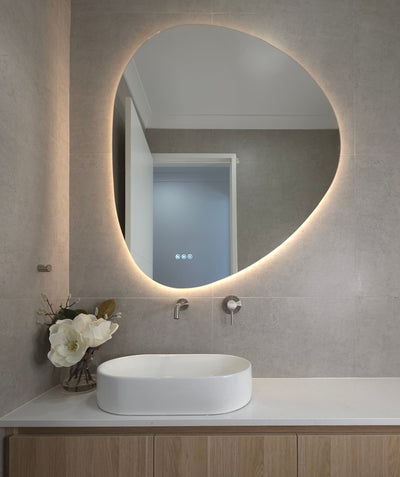
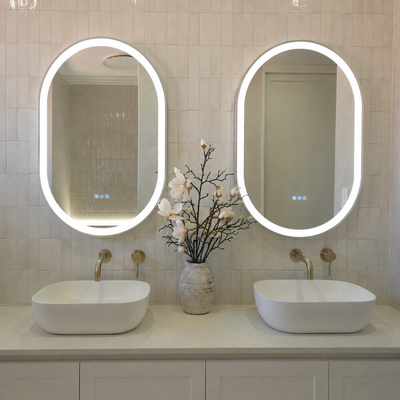
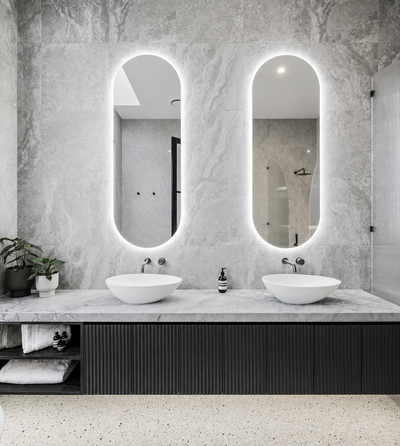



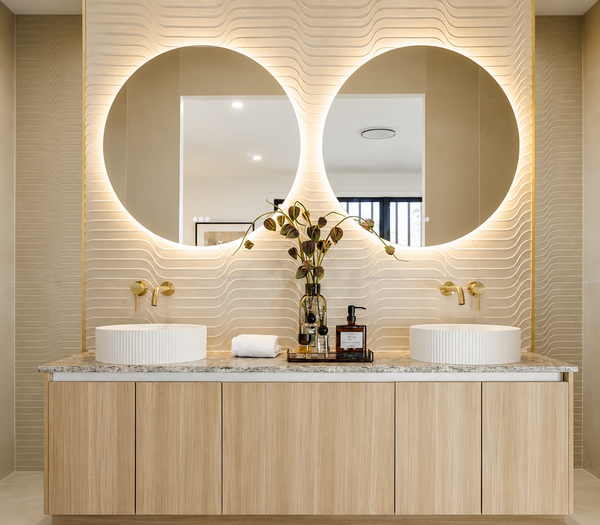
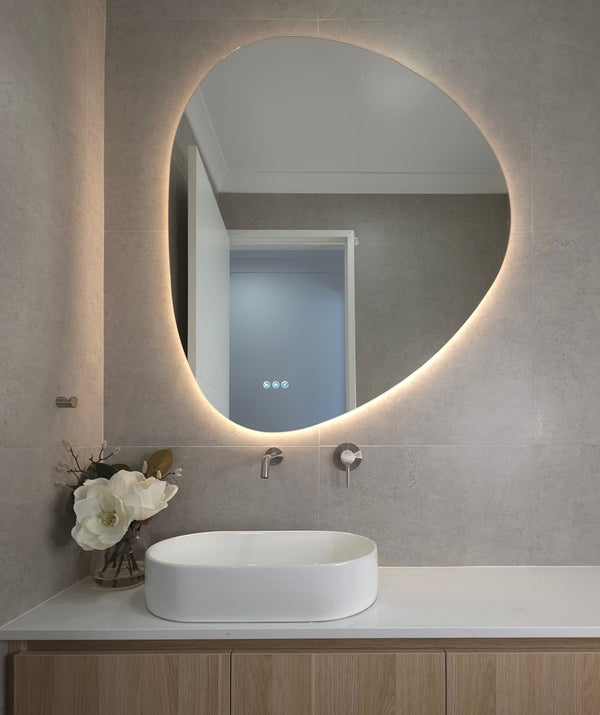
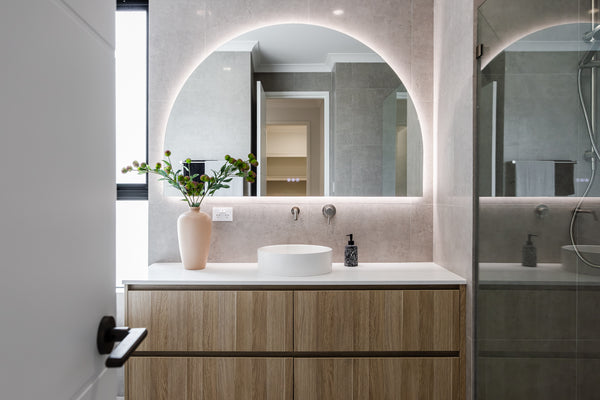
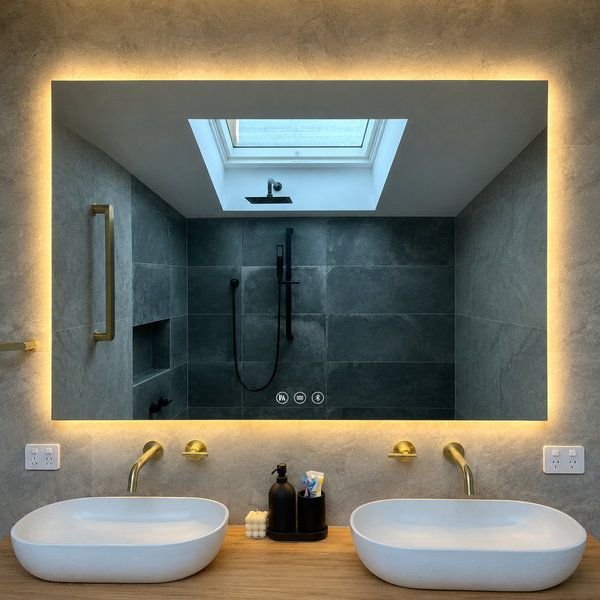
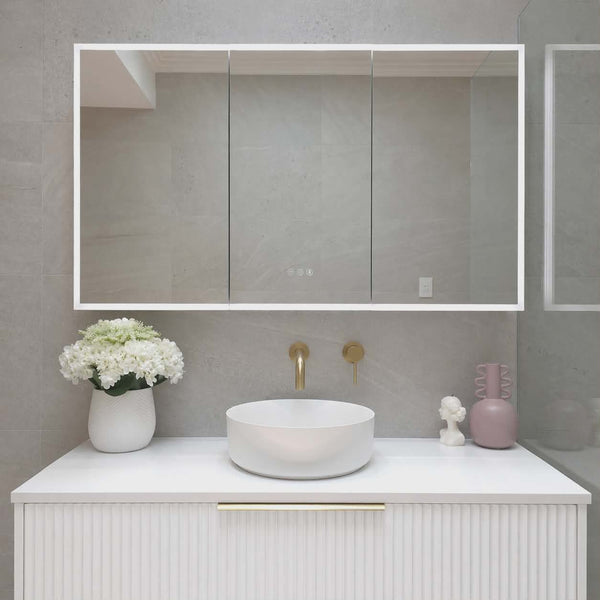

The basin is one of the most frequently used fixtures in any bathroom, touched multiple times a day by every household member. Choosing the right style genuinely improves cleaning, everyday functionality and how the whole vanity composition looks together, well beyond what its modest place in a renovation budget might suggest. A poorly matched basin can undermine an otherwise well-planned vanity, mirror and tapware selection just as easily as it can complete one.
This guide walks through every major basin type, sizing, material and how the basin should coordinate with the vanity, tapware and mirror already chosen, so the final result feels like one considered composition rather than several separate decisions. Whether you're planning a full renovation or simply replacing a tired basin, the same underlying principles apply.
Why Trust InVogue Mirrors & Bathware? InVogue is an Australian retailer trusted in over 20,000 homes, specialising in LED bathroom mirrors, mirror cabinets and tapware. The guidance in this article reflects how basins, tapware, mirrors and lighting work together in real Australian renovations.
Quick Answer
- Match basin size to vanity width — an oversized or undersized basin rarely looks intentional.
- Choose installation type based on your tapware — vessel basins suit wall-mounted taps, inset and undermount suit basin mixers.
- Prioritise cleaning and comfort alongside appearance, especially in family bathrooms.
- Treat basin, vanity and mirror as one composition, not three separate decisions.
Types of Bathroom Basins
Countertop (vessel) basins sit entirely on top of the vanity surface, creating a striking, sculptural look. They require regular wiping around the base where it meets the benchtop and are best installed with wall-mounted tapware sized to the basin's height. Above-counter basins are similar but typically sit slightly lower, with a portion recessed into the benchtop — offering a softer transition between basin and bench while retaining a decorative profile.
Inset basins drop into a cut-out in the benchtop with a visible rim, offering straightforward installation and easy compatibility with almost any standard basin mixer. Semi-recessed basins sit partly within the vanity and partly projecting forward, useful where benchtop depth is limited. Undermount basins are fitted beneath the benchtop for a seamless, rim-free look, with water wiped directly from the counter into the basin — genuinely easier to keep clean day to day. Integrated basins are moulded as one continuous surface with the benchtop, offering the cleanest possible line with no seams or joins at all, though this typically requires the basin and benchtop to be sourced and fabricated together rather than purchased separately.
Each installation type also carries its own practical trade-offs worth weighing before deciding. Vessel and above-counter basins tend to sit noticeably higher than the benchtop, which some households find more comfortable and others find awkward, particularly for children or shorter household members. Undermount and integrated basins, by contrast, sit at a consistent, predictable height that suits almost everyone without adjustment.
Designer Insight: the most successful bathrooms treat the basin, vanity and mirror as one composition rather than three independent purchases. Choosing them together, in the same planning session, is what produces a genuinely cohesive result.

Choosing the Right Basin Size
Small powder rooms suit a compact basin, often 350-400mm, paired with a proportionate vanity and mirror, keeping the whole composition in scale with the room. Family bathrooms generally suit a standard 450-600mm basin offering comfortable everyday use for multiple household members. Double vanities need two basins spaced with enough clearance between them for comfortable simultaneous use — typically at least 150mm of benchtop between basin edges. Luxury ensuites can support a larger, more sculptural basin as a genuine design feature, provided the vanity and mirror scale up to match, rather than leaving the basin looking oversized against a standard-scale vanity.
Ideal proportions follow the vanity's lead: the basin should sit comfortably within the benchtop without crowding the edges, the mirror should be sized to the vanity width as covered in our Mirror Size Guide, and tapware should be selected to suit the basin's specific depth and mounting position. For full vanity sizing guidance, see our Bathroom Vanity Buying Guide, and for double vanity layouts specifically, see our Double Vanity Mirror Guide. Getting these proportions right at the planning stage avoids the common regret of a basin that technically fits the vanity but never quite looks like it belongs there.

Basin Materials Explained
Ceramic remains the most common basin material, offering a durable, easy-to-clean surface at an accessible price point, suiting almost any bathroom style. Fine fireclay offers similar practicality with a slightly heavier, more substantial feel and excellent resistance to chipping. Solid surface basins provide a seamless, non-porous finish that resists staining, often used for integrated basin-and-benchtop designs. Stone basins bring genuine natural texture and character, though they require more careful maintenance and sealing over time. Engineered stone offers a similar aesthetic with more consistent durability and lower maintenance than natural stone. Glass basins make a bold decorative statement, suiting vessel-style installations, though they show water spotting more visibly than other materials and require more frequent wiping.
Beyond the basin itself, it's worth considering how each material ages over the years the bathroom will actually be used. Ceramic and fine fireclay tend to retain their original finish with minimal visible wear, while stone and engineered stone can develop subtle character over time depending on the specific material chosen. Glass, while striking initially, tends to show its age through accumulated micro-scratches more readily than the other materials on this list.
Matching Your Basin With Tapware
Basin mixers suit inset, semi-recessed and undermount basins with a standard tap hole, offering straightforward installation. Wall-mounted tapware pairs naturally with vessel and above-counter basins that have no tap hole at all. Spout reach must be matched precisely to the basin's position and depth to avoid water landing short of or beyond the bowl. Splash reduction depends on getting spout height and basin depth right together — a taller vessel basin needs a spout with the reach and height to match. Mounting height for wall-mounted tapware should be calculated from the specific basin chosen, not a generic industry default.
Designer Insight: correct tapware projection dramatically improves everyday usability. A spout positioned even a few centimetres off from the basin's centre can turn a beautiful fixture into a daily source of splashing and frustration.
For a full breakdown of tapware options, see our Bathroom Tapware Buying Guide, and for the complete comparison between mounting types, see our Wall-Mounted vs Basin Mixer Taps guide. Confirming basin and tapware compatibility before either purchase is finalised avoids one of the more common and costly renovation surprises.

Matching Your Basin With a Mirror
Mirror width should generally follow the vanity rather than the basin itself, though a single vessel basin off-centre on a wide vanity may warrant a mirror positioned to align with the basin instead. Mirror shape should complement the basin's own lines — a round vessel basin pairs naturally with a round or arch mirror, while a rectangular inset basin suits a rectangle mirror. Where storage is needed, a mirror cabinet works with any basin type without restriction. Lighting should be positioned to fall evenly across the face at the basin, regardless of basin style. Choosing between a frameless or framed mirror comes down to the room's broader style rather than the basin specifically.
For the complete mirror-selection process, see our Ultimate Bathroom Mirror Buying Guide, and for lighting considerations, see our Bathroom Lighting Guide. Approaching basin, mirror and lighting as one combined decision, rather than three sequential ones, is what produces a genuinely considered result.
Choosing the Right Basin for Different Bathroom Types
Small Bathrooms
A compact inset or semi-recessed basin makes the most of limited benchtop space without overwhelming the room. Avoiding an oversized vessel basin here is particularly important, since the extra height and footprint can make an already tight vanity feel cramped.
Family Bathrooms
An undermount or inset basin in durable ceramic suits the daily wear of a busy, shared bathroom, and is easier to clean around than a vessel style. With multiple household members using the basin every day, easy maintenance genuinely outweighs the decorative appeal of a more sculptural option.

Apartments
A compact inset or above-counter basin suits an apartment vanity without requiring extensive plumbing changes. This makes either option a practical choice where the building's existing plumbing can't easily be modified.
Luxury Ensuites
A sculptural vessel or above-counter basin, paired with wall-mounted tapware, reinforces the room's considered, high-end feel. Scale matters here — the basin should feel proportionate to a larger vanity and mirror, not simply larger for its own sake.
Guest Bathrooms
A simple inset basin covers occasional-use needs without unnecessary expense or maintenance complexity. Since guest bathrooms see lighter daily use, presentation can take priority over the durability considerations that matter most in a family bathroom.
Powder Rooms
With no daily grooming routine to accommodate, a powder room is the ideal place for a bold vessel basin as a genuine style statement. This is often the one room in the house where a striking, less practical choice carries the least everyday risk.
Common Basin Buying Mistakes
- Choosing an oversized vessel basin: a basin too large for the vanity can look disproportionate and reduce usable benchtop space.
- Incorrect tap height: mismatched with basin depth, this causes splashing and an awkward reach.
- Poor spout reach: a spout that doesn't align with the basin's centre sends water outside the intended area.
- Ignoring storage: some basin styles reduce usable cabinet space beneath the vanity — worth checking before committing.
- Prioritising style over functionality: a striking basin that's awkward to use daily becomes a genuine frustration.
- Poor mirror proportions: a mirror sized without reference to the basin and vanity rarely looks intentional.
Designer Insight: comfort and splash control are just as important as appearance. A basin chosen purely for its visual impact, without accounting for how it's actually used day to day, tends to become a source of ongoing frustration rather than lasting satisfaction.
Expert Designer Recommendations
Designer's Rules
- Choose basin, vanity and mirror together, not in isolation.
- Match tapware type to basin style before finalising either.
- Comfort and splash control matter just as much as appearance.
- Correct tapware projection dramatically improves everyday usability.
Comparison Tables
Basin Type → Best Application
| Basin Type | Best Application |
|---|---|
| Countertop (vessel) | Luxury and statement bathrooms, powder rooms |
| Above-counter | Luxury ensuites, contemporary bathrooms |
| Inset | Most bathroom types, simple installation |
| Semi-recessed | Bathrooms with limited benchtop depth |
| Undermount | Family bathrooms, easy-clean priority |
| Integrated | Minimalist, seamless design |
Material → Pros & Cons
| Material | Pros | Cons |
|---|---|---|
| Ceramic | Durable, affordable, easy to clean | Can chip if impacted heavily |
| Fine fireclay | Substantial feel, chip-resistant | Heavier, higher cost than ceramic |
| Solid surface | Seamless, stain-resistant | Can show scratches over time |
| Stone | Natural texture, genuine character | Requires sealing and careful maintenance |
| Engineered stone | Consistent, durable, lower maintenance | Higher cost than ceramic |
| Glass | Bold, decorative statement | Shows water spotting, needs frequent wiping |
Bathroom Type → Recommended Basin
| Bathroom Type | Recommended Basin |
|---|---|
| Small bathroom | Compact inset or semi-recessed |
| Family bathroom | Undermount or inset, durable ceramic |
| Apartment | Compact inset or above-counter |
| Luxury ensuite | Vessel or above-counter, statement material |
| Guest bathroom | Simple inset basin |
| Powder room | Bold vessel basin, statement piece |
Tapware Compatibility
| Basin Type | Compatible Tapware |
|---|---|
| Countertop (vessel) | Tall wall-mounted, tall basin mixer |
| Above-counter | Wall-mounted, tall basin mixer |
| Inset / Semi-recessed / Undermount | Standard basin mixer, wall-mounted |
| Integrated | Wall-mounted preferred |
Cleaning & Maintenance Comparison
| Basin Type | Cleaning & Maintenance |
|---|---|
| Countertop (vessel) | Requires wiping around the base seam |
| Inset | Moderate — visible rim collects some residue |
| Undermount | Easiest — wipe straight into the basin |
| Integrated | Easiest — no seams at all |
Frequently Asked Questions
What is the best type of bathroom basin?
There's no single best type — inset and undermount basins suit most everyday bathrooms, while vessel and above-counter basins suit luxury or statement bathrooms prioritising appearance. The most reliable approach is choosing based on how the bathroom is actually used, rather than which basin photographs best.
Are vessel basins practical?
Yes, provided the tapware height and reach are correctly matched — the main practical trade-off is slightly more cleaning around the base seam compared to an undermount basin. Households with young children may find the added basin height requires a step stool where an undermount basin wouldn't.
What basin suits a wall-mounted tap?
Vessel and above-counter basins, since neither requires a tap hole, pair most naturally with wall-mounted tapware. Confirming spout projection and height against the specific basin chosen remains essential regardless of which basin style is selected.
What size basin should I choose?
Size the basin to comfortably fit the vanity width without crowding the edges — typically 350-400mm for compact spaces and 450-600mm for standard bathrooms. Double vanities should allow enough clearance between basins for two people to use the space comfortably at once.
Which basin is easiest to clean?
Undermount and integrated basins are the easiest to clean, since there's no rim or seam to collect residue. Vessel basins require the most regular attention, particularly around the base where it meets the benchtop.
Can I install any basin on any vanity?
Not always — vanity benchtop thickness and cut-out compatibility need to be confirmed for inset, semi-recessed and undermount basins before purchase. Vessel and above-counter basins are generally more flexible, since they don't require a specific cut-out, but do need enough benchtop surface area to sit securely.
Designer's Cheat Sheet
Designer's Cheat Sheet
- ✔ Want easy cleaning? → Undermount or integrated
- ✔ Want a statement piece? → Vessel or above-counter
- ✔ Family bathroom? → Undermount or inset, ceramic
- ✔ Wall-mounted tapware? → Vessel or above-counter basin
- ✔ Unsure? → Inset basin is the most flexible, lowest-risk choice
Conclusion
The best bathroom basin balances aesthetics, comfort, cleaning and proportion, while complementing the vanity, mirror and tapware already chosen. Treating these fixtures as one coordinated composition, rather than separate purchases, is what produces a genuinely cohesive, functional bathroom — one that looks as good in ten years as it does on installation day. Getting the basin right at the planning stage saves both the cost and disruption of revisiting the decision later.
Ready to complete your bathroom's composition? Explore our complete Smart Mirrors, Mirror Cabinets and Bathroom Tapware collections, or browse our Best Sellers if you're not sure where to start.
Where To Next?
- Start here: Bathroom Vanity Buying Guide: How to Choose the Perfect Vanity for Your Bathroom (2026 Edition)
- Related guides: Bathroom Tapware Buying Guide, Wall-Mounted vs Basin Mixer Taps, The Ultimate Bathroom Mirror Buying Guide (2026 Edition), How to Choose the Right Mirror Size for Your Vanity, Bathroom Lighting Guide, Bathroom Renovation Mistakes: 21 Costly Mistakes to Avoid Before You Build and Bathroom Storage Ideas: 23 Smart Ways to Create a More Organised Bathroom
- Browse: the full Smart Mirrors range
- Need storage: the full Mirror Cabinets range
- Complete the room: our Bathroom Tapware range
- Not sure where to start: our Best Sellers

